Poultry Feeding System Design for 10,000–50,000 Birds (2026)
Proper poultry feeding system design is critical for farms raising 10,000–50,000 chickens. A well-planned automatic poultry feeding system ensures uniform feed distribution, minimizes waste, reduces labor, and supports optimal flock performance.
Quick Answer
A poultry feeding system design for 10,000–50,000 chickens typically includes 2–6 automatic feeding lines, 200–1,200 feeding pans or troughs, feed hoppers or silos with 3–12 ton capacity, and auger or chain feed transport systems to ensure uniform feed distribution across the poultry house.
Why Feeding System Design Matters for Commercial Poultry Farms
Feed represents 60–70% of total poultry production cost, making feeding system efficiency a critical factor in farm profitability. Poorly designed feeding layouts can lead to uneven bird growth, higher feed waste, and increased labor requirements. A well-designed system improves labor efficiency, feed distribution uniformity, flock uniformity, and farm scalability.
Key Factors in Poultry Feeding System Design
Number of Chickens
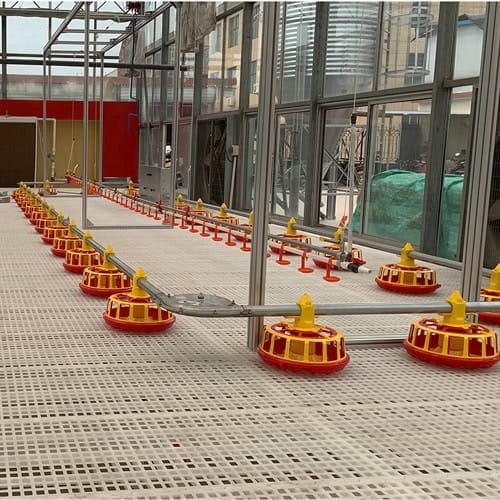
Farm size determines the number of feeding lines and pans needed.
Poultry House Length and Width
House dimensions dictate feed transport distance and motor power.
Bird Type (Broiler vs Layer)
Broilers need pan systems with adjustable height, while layers use trough or chain systems.
Feed Type (Mash, Crumble, Pellet)
Feed form affects auger/chain choice and pan/trough design.
Automation Level
From basic timer control to full sensor-based precision feeding.
Typical Feeding System Layout for 10,000 Chickens
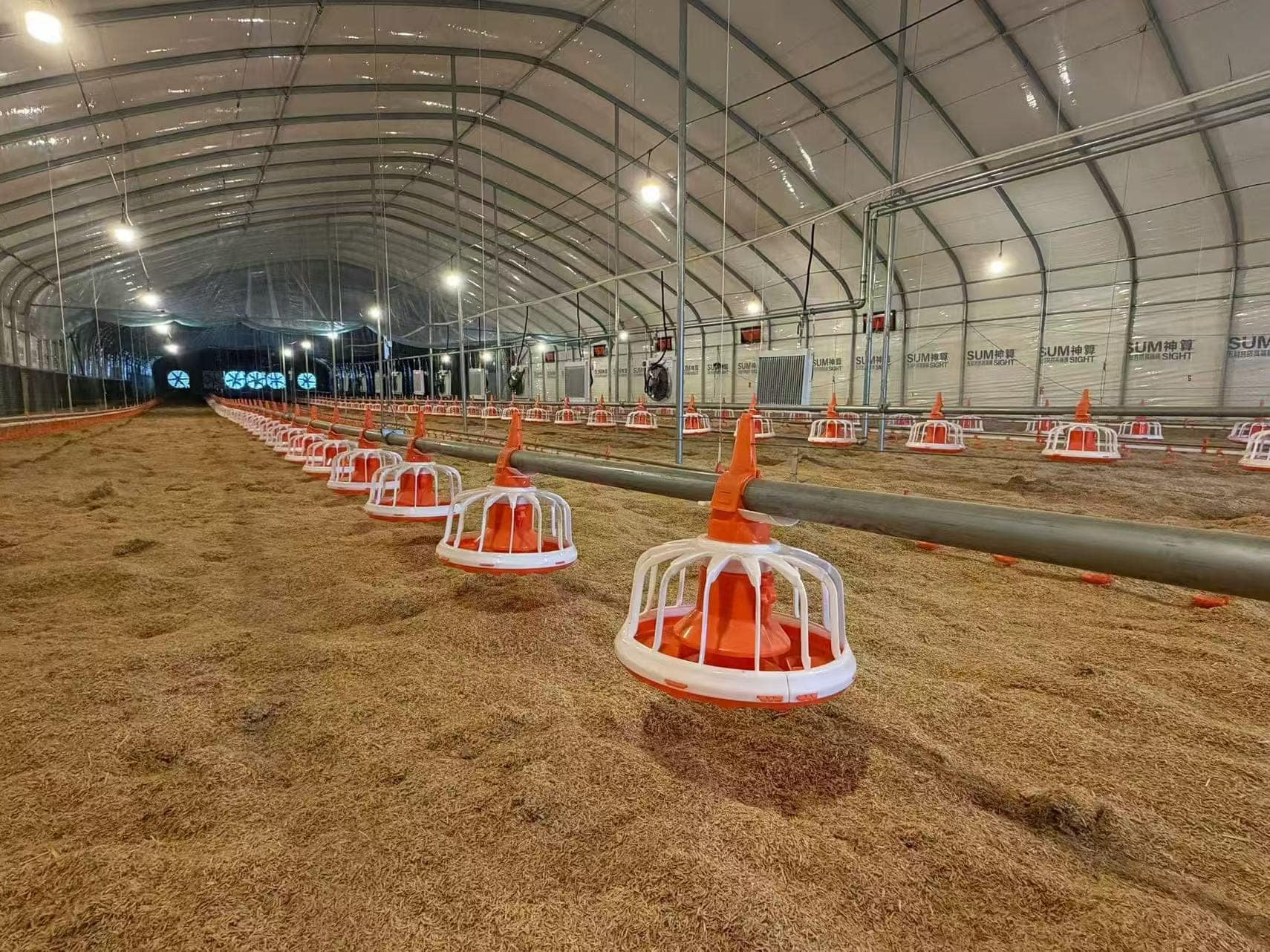
For a 10,000-bird farm, a single 100–120 m house usually uses 2 feeding lines with 200–300 pans (broilers) or troughs (layers). A 3–5 ton hopper and one 1.5–2.2 kW motor are typically sufficient.
Feeding System Design for 20,000 Chickens
For 20,000 birds, most farms use 2 houses or one larger house with 3 feeding lines. Pan/trough quantity increases to 400–600. Hopper capacity rises to 5–6 tons.
Feeding System Design for 50,000 Chickens

At 50,000 birds, a multi-house layout with centralized feed distribution is recommended. Large farms often integrate feeding systems with centralized silos and automated monitoring to ensure consistent feed supply across multiple poultry houses.
Poultry Feeding Line Capacity Table
| Farm Size | House Length | Feeding Lines | Number of Pans/Troughs | Daily Feed Capacity | Recommended Motor Power |
|---|---|---|---|---|---|
| 10,000 birds | 100–120 m | 2 | 200–300 | 1.8–2.5 tons | 1.5–2.2 kW |
| 20,000 birds | 120–150 m | 3 | 400–600 | 3.5–5 tons | 2.2–3 kW |
| 30,000 birds | 120–150 m | 3–4 | 600–800 | 5–7 tons | 3–4 kW |
| 50,000 birds | 120–150 m × 2–3 houses | 4–6 | 800–1,200 | 9–12 tons | 3–5.5 kW |
Common Design Mistakes in Poultry Feeding Systems
- Using too few feeding lines, causing birds at the end of the house to wait longer for feed
- Undersized motors leading to frequent blockages and downtime
- Incorrect hopper capacity, resulting in frequent refilling and labor waste
- Poor pan/trough spacing that creates competition and uneven growth
Best Practices for Efficient Feeding System Layout
- Match the number of feeding lines to house length and bird density
- Use level sensors to prevent overfeeding and waste
- Choose auger or chain system based on feed type and house layout
- Install anti-bridging devices in hoppers
- Plan for future expansion when designing initial layout
- Request a professional layout drawing from the supplier
Future Trends in Poultry Feeding System Design
- Precision feeding with real-time sensors and AI adjustment
- Full integration with poultry farm management software
- Remote monitoring and mobile app control
- Energy-efficient motors and variable speed drives
Conclusion
A well-planned poultry feeding system design is one of the most important factors determining the success of farms with 10,000–50,000 chickens. Proper layout, correct component sizing, and suitable automation level significantly reduce labor and feed waste while improving flock uniformity and farm profitability.
Need a Customized Poultry Feeding System Design?
Our engineering team provides professional poultry feeding system design, layout drawings, and equipment recommendations tailored to your farm size, house dimensions, and bird type.
Request Your Free Feeding System Design →
Related Articles
- Key Components of an Automatic Poultry Feeding System
- How an Automatic Chicken Feeding System
- Poultry Feeding System for Commercial Farms
- Poultry Feeding System Price Guide
By Caroline, Senior Poultry Equipment Specialist at Weifang Splendid Machinery Equipment Co., Ltd. (18 years global experience in broiler & layer systems).
• USDA Livestock & Poultry Outlook, Feb 2026
• Commercial Poultry Feeding System Reports 2025-2026
• Field performance data from commercial layer and broiler farms worldwide