Poultry Feeding Systems for Commercial Farms: Types & Guide (2026)
A poultry feeding system is automated equipment that delivers feed uniformly to birds in commercial houses. It is important because feed accounts for 60–70% of total production cost; a well-designed system reduces waste, improves feed conversion ratio (FCR), lowers labor requirements, and ensures every bird receives consistent nutrition, directly affecting growth rate, egg production and overall farm profitability.
Modern feeding systems have become one of the highest-ROI upgrades for commercial poultry farms. They directly influence daily feed intake uniformity, labor hours, and flock performance. Choosing the right system for your farm size, bird type (layers or broilers) and automation level can save thousands of dollars per house every year while improving bird welfare and product quality.
Quick Answer
The three main poultry feeding systems are chain feeding systems for layer farms, auger feeding systems for feed transport, and pan feeding systems for broiler houses. Automatic systems reduce feed waste and improve flock uniformity.
What Is a Poultry Feeding System?
A poultry feeding system consists of storage hoppers, conveyors (chain or auger), distribution lines and feeding devices (troughs, pans or nipples) that automatically transport and dispense feed to birds. Modern systems are fully or semi-automatic, controlled by timers, sensors or central computers.
Main Types of Poultry Feeding Systems
Chain Feeding System
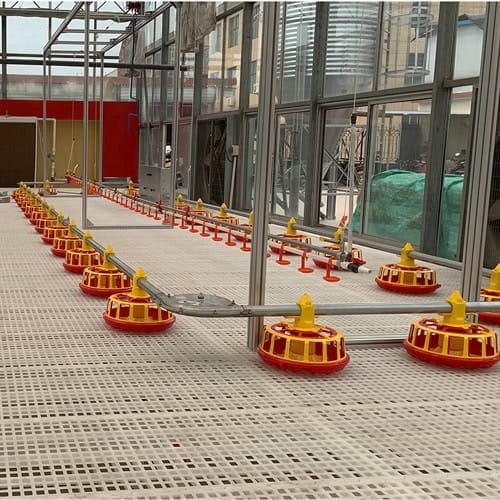
Chain feeding systems use a continuous chain that drags feed along open troughs. They are widely used in layer and breeder farms because they provide simultaneous access to feed for all birds in a row.
Auger Feeding System
Auger (screw) feeding systems use a rotating spiral inside a tube to transport feed from the hopper to multiple points. They are flexible for both layer and broiler houses.
Pan Feeding System
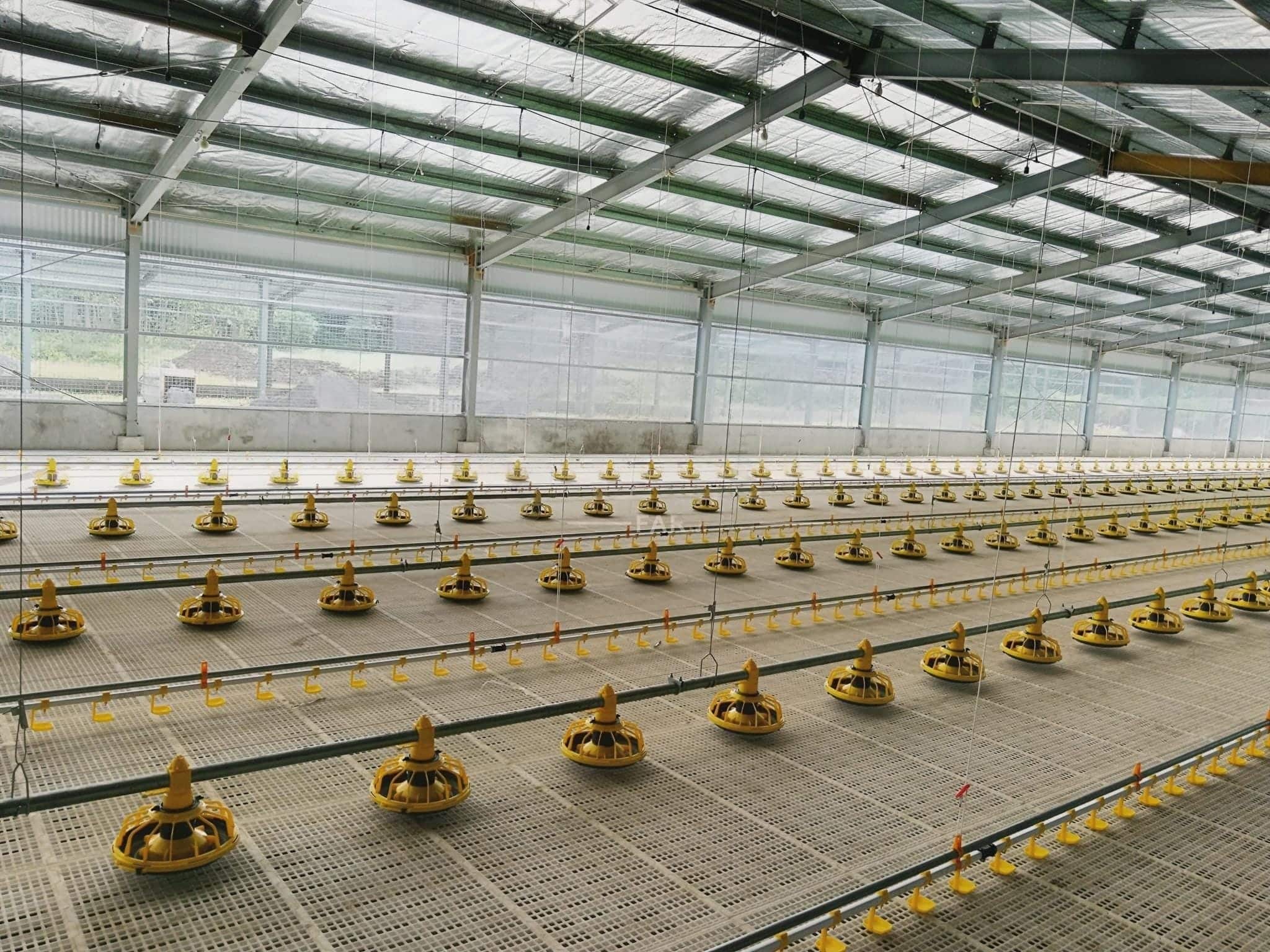
Pan feeding systems are the standard for broiler farms. Each pan is suspended from the ceiling and filled automatically from overhead pipes.
Comparison of Poultry Feeding Systems
| System Type | Best For | Feed Waste | Labor Saving | Typical Cost | Maintenance |
|---|---|---|---|---|---|
| Chain Feeding | Layer & Breeder Farms | Low–Medium | 60–75% | Medium | Low |
| Auger Feeding | Layer & Broiler Farms | Very Low | 70–85% | Medium–High | Medium |
| Pan Feeding | Broiler Farms | Low | 75–90% | Medium | Low–Medium |
Why Feeding Systems Are Critical in Commercial Poultry Production
Feed is the largest single expense in poultry production. Even a 5% reduction in feed waste or 0.05 improvement in FCR can generate substantial profit. Automatic feeding systems ensure uniform distribution, reduce selective feeding by dominant birds, minimize spillage, and allow precise daily ration control.
Feeding System Design for Layer Farms
Layer farms typically use chain or auger trough systems running the full length of the house. Troughs are positioned at optimal height for hens of different ages.
Feeding System Design for Broiler Farms
Broiler houses rely heavily on pan feeding systems. Pans are lowered as birds grow and raised as they approach market weight.
Key Components of an Automatic Poultry Feeding System
- Storage silos or hoppers
- Chain or auger conveyors
- Distribution lines and drop tubes
- Feeding devices (troughs, pans, or spiral feeders)
- Level sensors and control panels
- Anti-bridging motors and safety switches
How Automatic Feeding Systems Improve Farm Efficiency
Automatic systems typically reduce feed waste by 8–15%, improve FCR by 0.03–0.08 points, and cut daily labor by 60–80%.
Common Feeding System Problems and How to Avoid Them
- Feed bridging in silos — solved by proper silo design and vibration motors
- Uneven distribution — prevented by regular chain/auger tension checks
- Excessive spillage — avoided by correct pan/trough height adjustment
How to Choose the Right Feeding System for Your Poultry Farm
Consider farm size, bird type, current labor availability, budget, and future expansion plans. Small farms may start with simpler chain or basic pan systems. Large operations benefit from fully automated systems with central control.
Conclusion
A well-designed poultry feeding system is one of the most important investments for commercial farms in 2026. The right choice improves feed efficiency, reduces labor, enhances flock uniformity and directly increases profitability.
Need a Professional Feeding System Design for Your Farm?
Our poultry engineering team provides complete feeding system layout, equipment selection and installation support for commercial layer and broiler farms worldwide.
Request Your Free Feeding System Design →
Related Articles
- Key Components of an Automatic Poultry Feeding System
- How an Automatic Chicken Feeding System
- Poultry Feeding System for Commercial Farms
- Poultry Feeding System Design for 10,000–50,000 Chickens
By Caroline, Senior Poultry Equipment Specialist at Weifang Splendid Machinery Equipment Co., Ltd. (18 years global experience in broiler & layer systems).
• USDA Livestock & Poultry Outlook, Feb 2026
• Commercial Poultry Feeding System Reports 2025-2026
• Field performance data from commercial layer and broiler farms worldwide