Key Components of Automatic Poultry Feeding Systems (2026 Guide)
An automatic poultry feeding system is a fully integrated set of equipment that stores, transports, and distributes feed to birds with minimal human intervention. Understanding its key components is essential for commercial poultry farms because the right system can reduce labor by 60–80%, cut feed waste by 8–15%, and improve flock uniformity and overall farm profitability.
In 2026, with rising feed costs and labor shortages, choosing the correct automatic poultry feeding system components has become one of the most important decisions for poultry farm owners and equipment distributors.
Quick Answer
The main components of an automatic poultry feeding system are feed hopper, auger or chain transport system, feed lines, feeding pans or troughs, drive motor unit, and feed level sensors. Together they deliver precise, uniform feed to every bird, greatly reducing labor and feed waste.
Main Components of an Automatic Poultry Feeding System
Feed Hopper

The feed hopper (or silo) is the starting point of the system. It stores large quantities of feed and supplies it steadily to the transport system.
Auger or Feed Transport System
This is the “conveyor belt” of the feeding system. An auger (screw) or chain system moves feed from the hopper through pipes to the feeding lines inside the poultry house.
Feed Lines
Feed lines run the length of the poultry house and distribute feed to individual pans or troughs. They ensure every bird has equal access to fresh feed at the same time.
Feeding Pans or Troughs
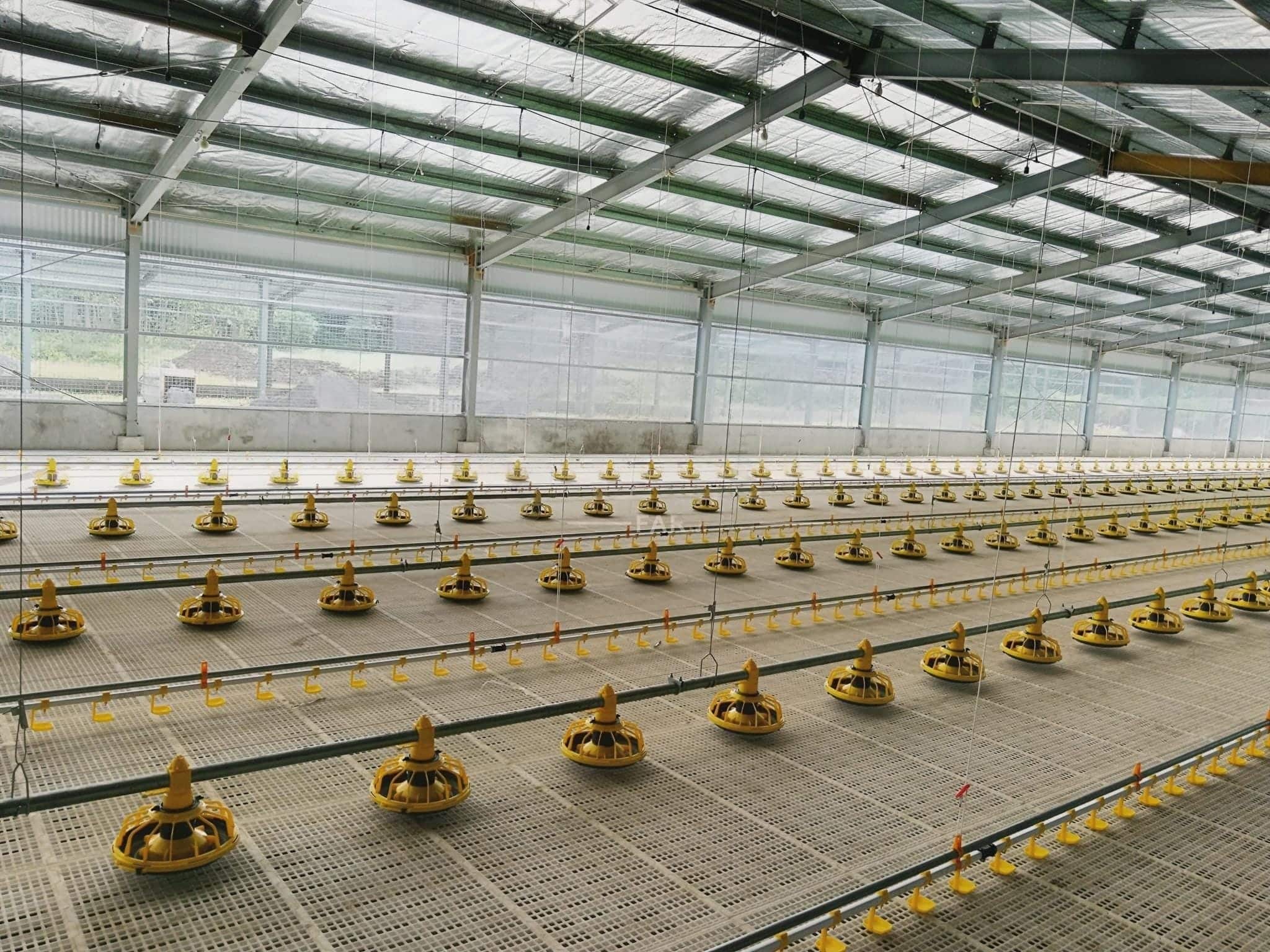
These are the actual feeding points. Broiler farms usually use pans, while layer farms often use troughs. Modern designs include anti-spill rims and adjustable height to minimize waste.
Drive Motor Unit
The motor powers the entire transport system. High-quality motors are energy-efficient, quiet, and equipped with overload protection.
Feed Level Sensors
Sensors monitor feed levels in hoppers and pans, preventing overfeeding or empty lines. They automatically stop the system when feed reaches the desired level.
How These Components Work Together in a Poultry House
The process starts at the hopper. The drive motor activates the auger or chain, moving feed through pipes into the feed lines. As feed reaches each pan or trough, level sensors signal the controller to stop or continue flow. The entire cycle is timed so that every bird receives fresh feed at the same moment.
Feeding System Layout for Different Poultry Houses
Broiler Houses
Broiler houses typically use pan feeding systems with 400–600 pans per 120 m house. Pans are suspended and adjusted in height as birds grow.
Layer Farms
Layer houses usually use chain feeding systems running along troughs in front of the cages.
Large Commercial Poultry Farms
Large farms often combine multiple auger lines with central control systems and remote monitoring.
Comparison Table of Feeding System Components
| Component | Main Function | Key Benefit | Typical Use |
|---|---|---|---|
| Feed Hopper | Storage & supply | Prevents shortages | All farms |
| Auger / Chain Transport | Feed movement | Reliable long-distance delivery | Medium to large farms |
| Feed Lines | Distribution | Even access for all birds | All houses |
| Feeding Pans / Troughs | Actual feeding point | Reduces waste | Broilers (pans), Layers (troughs) |
| Drive Motor | Power source | Energy efficient | All automatic systems |
| Feed Level Sensors | Monitoring | Prevents over/under feeding | Modern automated farms |
Common Problems in Feeding Systems and Solutions
- Feed bridging in hopper — Use anti-bridging motors or vibration devices
- Uneven feed distribution — Regular tension checks and level sensors
- Motor overload or failure — Install overload protection and backup systems
- Excessive spillage — Adjust pan height and use anti-spill designs
How to Choose High-Quality Poultry Feeding Equipment
When selecting an automatic poultry feeding system, focus on hopper capacity, auger quality, motor reliability, sensor accuracy, and after-sales support. Request a detailed layout drawing from the supplier that matches your house dimensions and bird type.
FAQ
Q: What components are included in an automatic poultry feeding system?
A: The main components are feed hopper, auger/chain transport, feed lines, pans/troughs, drive motor, and level sensors.
Q: How many feeding lines are needed for a poultry house?
A: Most broiler houses use 2 lines, while layer houses typically need 2–3 lines per tier.
Q: How does a poultry feed auger work?
A: The auger is a rotating screw inside a tube that pushes feed from the hopper to the feeding lines.
Q: What is the lifespan of poultry feeding equipment?
A: High-quality systems last 8–12 years with proper maintenance.
Q: Is an automatic poultry feeding system suitable for small farms?
A: Yes. Even smaller farms benefit from reduced waste and labor savings.
Conclusion
Understanding the key components of an automatic poultry feeding system helps poultry farms make informed equipment decisions that directly improve productivity and profitability.
Need a Professional Automatic Poultry Feeding System Design?
Our engineering team provides complete feeding system layout, equipment selection, and installation support for commercial layer and broiler farms worldwide.
Request Your Free Feeding System Design →
Related Articles
- Poultry Feeding System Price Guide
- How an Automatic Chicken Feeding System
- Poultry Feeding System for Commercial Farms
- Poultry Feeding System Design for 10,000–50,000 Chickens
By Caroline, Senior Poultry Equipment Specialist at Weifang Splendid Machinery Equipment Co., Ltd. (18 years global experience in broiler & layer systems).
• USDA Livestock & Poultry Outlook, Feb 2026
• Commercial Poultry Feeding System Reports 2025-2026
• Field performance data from commercial layer and broiler farms worldwide