LED Lighting Programs for Maximizing Egg Production (2026)
In commercial multi-tier layer cage systems, precise LED lighting control directly influences hormone regulation, egg production consistency, and long-term flock welfare. Proper configuration of light intensity, spectrum, and automated dimming cycles is essential for maximizing yield while minimizing stress-related issues.
Quick Answer
Automating a 16-hour light schedule using 2700K red-spectrum LED tubes at 20–30 lux triggers consistent reproductive hormone release in layers. This prevents flock dropouts, reduces cage fatigue, and supports stable egg production across all tiers when combined with smooth zero-flicker sunrise and sunset transitions.

The Avian Photoreception Challenge: Why Household Bulbs Destroy Laying Yield
Chickens perceive rapid AC grid flickering that is invisible to the human eye. This constant neurological stress increases pecking behavior, elevates cortisol levels, and causes sudden drops in egg weight and production uniformity, especially in high-density multi-tier cage environments.
Step 1: Calibrating Spectrum and Lux Levels for Multi-Tier Cages
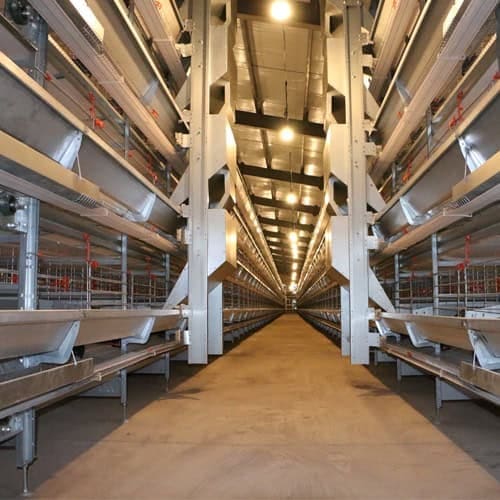
Lighting columns must be evenly distributed across all vertical tiers to eliminate shadowed dark spots in lower levels. Using warm 2700K red-spectrum LEDs at 20–30 lux at bird level ensures consistent photoreception and prevents lower-tier birds from experiencing reduced light stimulation.
LED Lighting & Spectrum Standards for Commercial Layer Houses (2026 Engineering Data)
| Flock Growth Stage | Target Light Duration (Hours) | Ideal Light Intensity (Lux) | Color Spectrum Peak (nm) | Operational Layout Goal |
|---|---|---|---|---|
| Pullet Rearing (0–16 weeks) | 8–12 | 5–15 | 4000K cool white | Even vertical distribution to support skeletal development |
| Pre-Lay Transition (16–20 weeks) | 12–14 | 10–20 | 2700K warm white | Gradual increase to stimulate reproductive system |
| Peak Production | 16 | 20–30 | 620–660 nm red peak | Uniform illumination across all cage tiers |
| Late Production / Maintenance | 16 | 15–25 | 620–660 nm red peak | Maintain consistency while reducing stress |
Step 2: Programming Intelligent Zero-Flicker Sunrise & Sunset Dimming Loops
Using 0–10V dimming panels, light intensity should transition smoothly from 0% to 100% over 20–30 minutes. This simulates natural dawn and dusk, preventing sudden panic, flight responses, and injuries caused by abrupt lighting changes in multi-tier cage systems.
Heavy-Duty Industrial Engineering: Demanding IP67 Waterproofing against Ammonia Corrosion
High ammonia concentrations and frequent high-pressure disinfection washdowns rapidly degrade standard consumer-grade lighting components. Hermetically sealed IP67-rated LED housings with gas-tight construction are mandatory to maintain long-term reliability and safety in commercial layer houses.
Conclusion
Proper configuration of LED lighting programs, including spectrum selection, lux calibration, and zero-flicker dimming, is one of the highest-ROI investments in commercial layer production. Well-designed systems improve egg yield consistency while reducing stress-related losses across all cage tiers.
Need a Free Turnkey Poultry House Environmental Design & Intelligent Lighting Layout Quote?
Our engineering team provides complete lighting system design, lux mapping, and automated control panel configuration for commercial multi-tier layer cage projects.
Request Your Free Turnkey Poultry House Environmental Design & Intelligent Lighting Layout Quote →
Related Articles
- Choosing the Right Manure Removal Belt Material: PP vs. PVC in Automatic Layer Cages (2026)
- Why Hot-Dip Galvanized Layer Cages Are Most Cost-Effective for Large Farms (2026)
- How to Adjust Automated Layer Cage Feeding Trolleys for Uniform Nutrition (2026)
By Caroline, Senior Poultry Equipment Specialist at Weifang Splendid Machinery Equipment Co., Ltd. (18 years global experience in commercial poultry lighting and environmental control systems).
• Commercial Poultry House Lighting Engineering Standards 2025-2026
• LED Spectrum Performance Data for Layer Production
• Field reports from automated lighting installations in multi-tier layer cage houses