How to Adjust Automated Layer Cage Feeding Trolleys for Uniform Nutrition
Precise adjustment of automated layer cage feeding trolleys (gantry feeders) is essential for achieving uniform nutrition across all cage tiers. Even small misalignments or incorrect feed gate settings cause dominant birds to receive more premium feed particles while lower-tier hens get mostly dust, directly reducing overall egg weight uniformity and flock performance.
Quick Answer
Correct calibration of layer cage feeding trolleys requires track level tolerance within ±2mm, regulating block gap of 8–12mm for standard mash feed, trolley traveling speed of 8–12 m/min, and uniform feed layer thickness of 25–35mm in the trough. When properly adjusted, these settings deliver 98%+ flock uniformity and consistent egg size in commercial layer operations.

The Hidden Threat of Uneven Feeding: Why Flock Uniformity Destroys Egg Profits
Uneven feed distribution in automated layer cages leads to significant variation in body weight and egg size. Dominant birds selectively pick larger particles, leaving finer dust for birds in lower tiers. This results in poor flock uniformity, lower peak production, and increased percentage of undersized or broken eggs, directly impacting farm profitability.
Step 1: Calibrating the Feed Regulating Blocks and Slide Gates
Feed regulating blocks at the bottom of the trolley hopper control the exact amount of feed dropped into the trough. Adjust the gap to 8–12mm for standard layer mash to achieve consistent 25–35mm feed depth across the entire trough length. Check and recalibrate every 7–10 days or after each flock change.
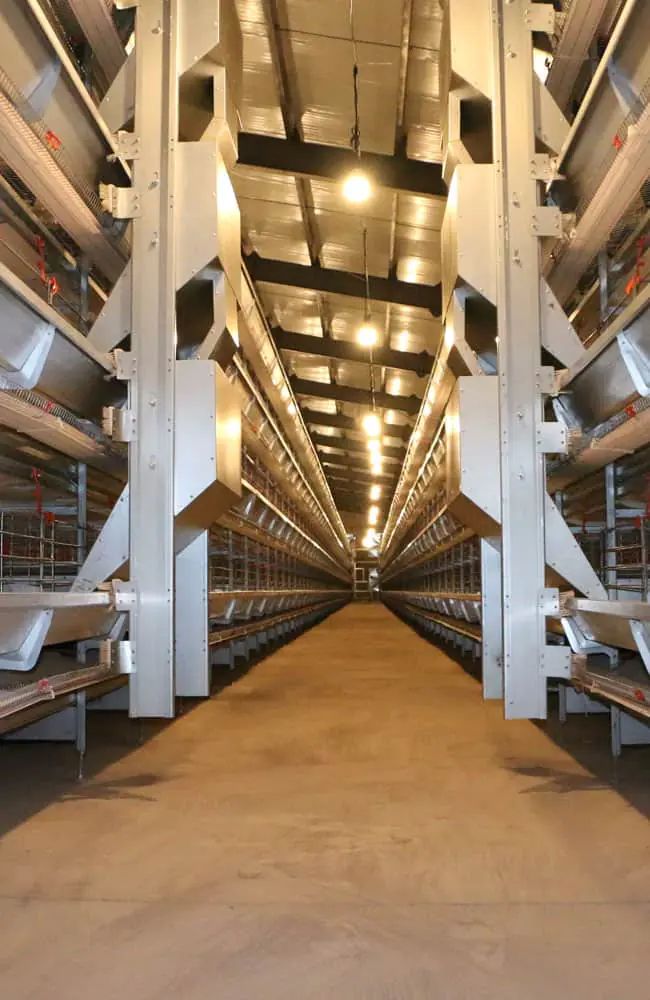
Calibration Standards for Commercial Layer Feeding Trolleys (2026 Metrics)
| Parameter | Recommended Value |
|---|---|
| Track Level Tolerance | ±2mm across full house length |
| Regulating Block Gap | 8–12mm (mash feed) |
| Traveling Speed | 8–12 m/min |
| Feed Layer Thickness | 25–35mm in trough |
| Inspection Frequency | Every 7–10 days |
Step 2: Aligning the Traveling Tracks and Cable Tension
Track alignment must stay within ±2mm across the entire house length. A 2mm slant causes the trolley to tilt, overloading the drive motor and dropping uneven feed amounts. Maintain proper cable tension and check wheel alignment monthly to ensure smooth, level travel.
Advanced Automation Tips: Matching Trolley Run Times with Layer Lighting Programs
Sync automatic feeding trolley run times with the lighting program. Run the trolley during the first 2–3 hours after lights come on when hens are most active. This prevents crowd stress during peak egg-laying hours and ensures every bird receives fresh feed at the optimal time.
Conclusion
Precise mechanical calibration of automated layer cage feeding trolleys is critical for achieving uniform nutrition, consistent egg size, and maximum flock performance. Regular adjustment of regulating blocks, track alignment, and run timing delivers measurable improvements in egg production uniformity and overall farm profitability.
Need a Free Turnkey Layer Cage Layout Design & Equipment Quote?
Our engineering team provides complete layer cage layout design, feeding trolley calibration support, and turnkey equipment solutions for commercial farms.
Request Your Free Turnkey Layer Cage Layout Design & Equipment Quote →
Related Articles
- Choosing the Right Manure Removal Belt Material: PP vs. PVC in Automatic Layer Cages (2026)
- Why Hot-Dip Galvanized Layer Cages Are Most Cost-Effective for Large Farms (2026)
- Ideal Temperature and Humidity for Layer Chicken Houses
By Caroline, Senior Poultry Equipment Specialist at Weifang Splendid Machinery Equipment Co., Ltd. (18 years global experience in layer systems).
• Global Layer Cage Mechanical Engineering Standards 2025-2026
• Field data from automated egg integration projects
• Commercial layer farm performance data from calibrated feeding trolleys