Ideal Temperature and Humidity for Layer Chicken Houses
The ideal layer house temperature humidity for commercial egg farms is 18–24°C with 50–70% relative humidity. Maintaining proper layer house temperature humidity is critical for egg production, feed efficiency, and bird welfare — especially in hot climates like Nigeria, Saudi Arabia, the Philippines, and Kenya.
Quick Answer: For adult layers, keep layer house temperature humidity at 21–24°C and 50–70% RH. Below 18°C or above 27°C, or humidity outside 40–80%, egg output drops sharply and mortality rises. Proper layer house temperature humidity control can increase production by 8–15%.
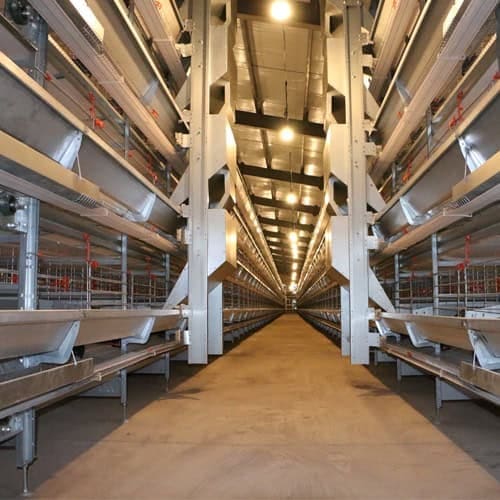
Ideal Temperature and Humidity for Layer Chickens by Age
| Bird Stage | Ideal Temperature | Ideal Humidity | Effect if Wrong |
|---|---|---|---|
| Chicks (0–6 weeks) | 32–35°C (gradually reduced) | 60–70% | Poor growth, high mortality |
| Pullets (7–18 weeks) | 21–24°C | 55–65% | Delayed maturity |
| Adult Layers | 18–24°C | 50–70% | Lower egg production |
Why Proper Layer House Temperature Humidity Matters
- Directly affects feed intake and egg size
- Reduces heat stress and mortality
- Improves shell quality and reduces cracked eggs
- Boosts overall flock uniformity
Signs Your Layer House Temperature or Humidity Is Incorrect
- Hens panting or spreading wings (heat stress)
- Wet litter and ammonia smell (humidity too high)
- Dusty air and respiratory irritation (humidity too low)
- Sudden drop in egg production
- Thin eggshells and smaller egg size
Equipment Used to Control Layer House Temperature and Humidity
Modern layer farms control temperature and humidity using:
- Tunnel ventilation fans
- Evaporative cooling pads
- Air inlets for fresh air distribution
- Automated temperature and humidity sensors
- Environmental controllers
Real Farm Scenario
A 120,000-layer farm in Saudi Arabia maintained strict layer house temperature humidity control (22°C / 55% RH) using tunnel ventilation and cooling pads. Egg production reached 92% hen-day production even when outside temperature hit 42°C, while neighboring farms without proper poultry house temperature and chicken house humidity management dropped below 78%.
FAQ – Common Questions from Layer Farm Owners
Q: What is the ideal layer house temperature humidity for adult layers?
A: 18–24°C and 50–70% relative humidity.
Q: How does high humidity affect layer houses?
A: Above 80% RH combined with high temperature causes severe heat stress and lower egg output.
Q: Can I control layer house temperature humidity in hot climates?
A: Yes — tunnel ventilation + evaporative cooling pads is the most effective solution.
Q: What happens if layer house temperature humidity is too low?
A: Below 40% RH causes dry air, dusty conditions, and increased respiratory problems.
Q: How often should I monitor layer house temperature humidity?
A: Daily monitoring with automated sensors is recommended for commercial farms.
Not Sure If Your Layer House Temperature Humidity Is Optimal?
Our engineers can design a complete climate control plan tailored to your house size, location, and cage system.
Get a Free Poultry House Climate Control Design →
Related Guides for New Layer Farms
- A-Type vs H-Type Cost Comparison
- How Automatic Egg Collection Systems Work in Modern Layer Farms
- A-Type vs H-Type Layer Chicken Cage (2026): Cost, Density & Best Choice for Egg Farms?
- How Many Chickens Can Be Kept in a 4 Tier Layer Cage System?
- What Is the Best Ventilation System for Layer Chicken Houses?
By Caroline, Senior Poultry Equipment Specialist at Weifang Splendid Machinery Equipment Co., Ltd. (18 years global experience in broiler & layer systems, has helped 200+ farms in Nigeria, Saudi Arabia, Philippines and Kenya).
• USDA Livestock & Poultry Outlook, Feb 2026
• Commercial Layer Housing Reports 2025-2026
• Field data from tropical layer farms
Also read: Fan And Cooling Pad Systems | Global Project Cases