How to Start an Egg Farm: Table Eggs in Cages, Hatching Eggs on a Breeder Floor
Start here
- Name the product first: table eggs or hatching eggs. That choice sets the house, not a catalog page.
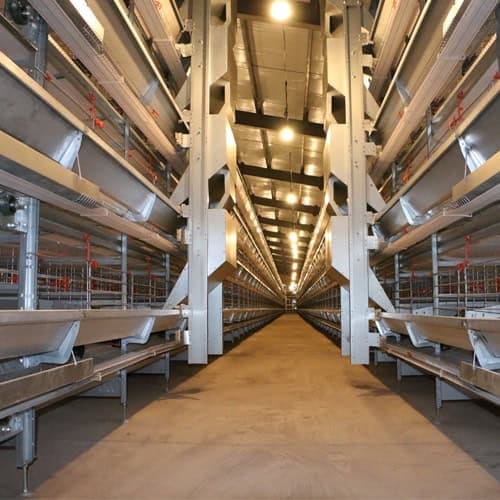
- Commercial table-egg flocks in most export markets still sit in A-type or H-type cages because collection, manure and labor stay on one drawing.
- A floor with nests is the usual package when males stay with females for fertile eggs—not a second way to run a table-egg house.
- Place pullets only after water, manure and the egg path exist. Weifang Splendid maps that list to the building.
A farm that wants a poultry farm for eggs is buying a supply line. The first fork is the egg itself. Table eggs leave a cage row on a belt. Hatching eggs leave a nest in a house that also holds roosters. Mixing those two drawings is how first-cycle farms lose eggs to the litter and fight ammonia.
Cage type comparison lives in the egg-equipment guide. This page is the start sequence and the health work that sits around that choice.

Two egg businesses, two interiors
Outside markets that banned conventional cages, commercial table eggs are still produced mainly in cages. A U.S. industry housing overview puts about 95 percent of commercial layers in cage systems, with cage-free a small share. That does not make floor table-egg houses illegal. It does mean a buyer who wants volume, clean eggs and fewer people walking rows usually specifies A-type or H-type cages.
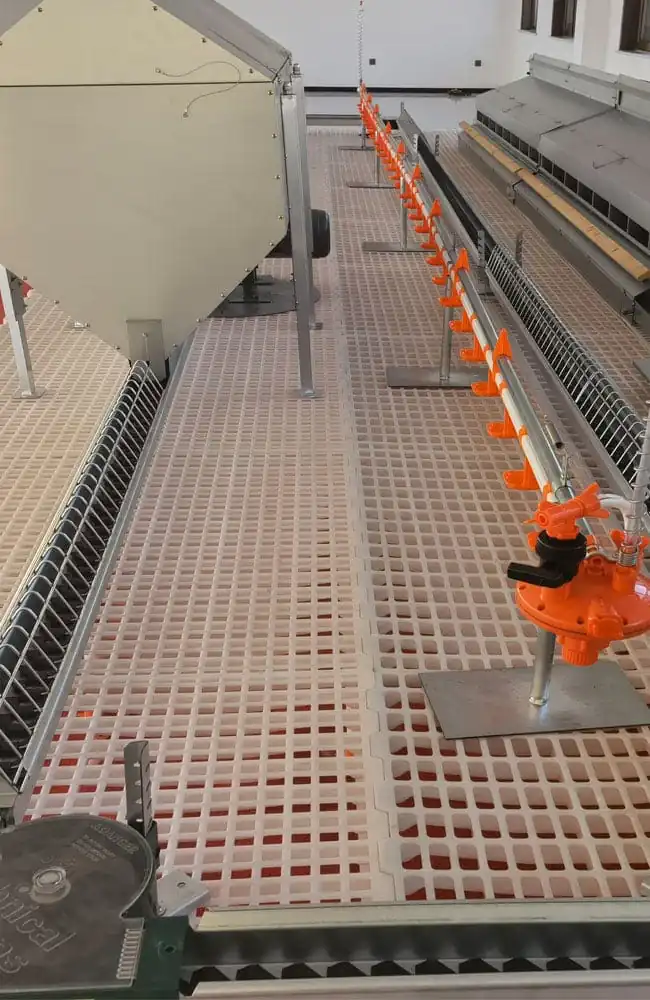
Floor-and-nest houses earn their keep when the farm needs fertility. Broiler and layer breeders are kept as mixed-sex flocks on slats plus a scratch strip, with nest boxes and separate-sex feeding. That is a parent-stock job, not “layers without cages.”
| Question | Table-egg house | Hatching-egg / breeder house |
|---|---|---|
| Who is in the house? | Hens only | Hens plus roosters at a managed ratio |
| Where do eggs go? | Cage floor to belt | Community or single nests, then a collector |
| Typical package | A-type or H-type cages, nipples, manure belt | Slats, scratch, nests, hen chain, raised male pans |
| Why not the other layout? | Floor table eggs need nest training, more labor, more dirty eggs | Cages block natural mating unless the farm runs AI |
Field note. If the inquiry says “floor layers” and never mentions males, nests or hatching eggs, ask again before you price a slat house. Many first-time buyers mean table eggs and still need a cage row.
Start sequence that does not fight the first flock
What actually keeps hens in lay
Vaccines belong to the veterinarian. The house has four jobs that equipment either does or does not: drinkable water at the beak, manure that leaves, light hours that do not jump, air that reaches the last cage or the nest line.
| If this slips | What the flock shows | What to spec |
|---|---|---|
| Nipples dry or set too high | Uneven crops, dip in lay | One drinker spec per row, checked after every raise |
| Manure left under cages | Ammonia, dirty eggs, wet pads | Belt on a set interval, not “when staff have time” |
| Nests ignored on a breeder floor | Floor eggs, hatchery rejects | Nest count, slat height and feed times away from peak lay |
| Light clock drifting | Pause in lay | A clock the house keeps after a power cut |
| Dead air on the top tier | Heat stress, pecking | Fan wall sized to the stack, not only to floor area |

Do not start from a broiler drawing.
Pans and a catch door move meat. They do not collect table eggs or protect hatching eggs. Rebuilding a grow-out house for layers means new height, aisles and an egg path—not a change of feed bag.
What to send before you place birds
Target hens (and males if hatching eggs). House length, width, eave height. Climate or country. Cage or breeder floor. How manure leaves. Whether a silo and fans sit on the same invoice.
FAQ
How do I start a poultry farm for eggs?
Decide table eggs or hatching eggs. Size one house to one interior. Install water, manure and collection. Place one age of pullets. Do not buy hens against an empty shed.
Are floor houses used for table eggs?
They exist, especially where cage-free rules or premiums apply. For most commercial volume outside those markets, cages remain the working default because collection and manure stay controlled. A slat-and-nest floor with roosters is the usual hatching-egg house.
What keeps laying hens healthy?
Water at the beak, manure leaving the house, a light clock that holds, and air at the last row. Those four are equipment and a daily walk, not a supplement list.
Do table-egg houses need roosters?
No. Males belong in a breeder house when the farm sells fertile eggs.
Send the house, not a photo of a cage.
Hen numbers, male numbers if any, three building sizes, climate or country, table eggs or hatching eggs. Weifang Splendid will return one interior list.