Egg Farming Equipment: Cages, Floor Systems, and Collection Lines
- Egg farming equipment is specified for laying hens: A-type cages, H-type cages, or floor systems with nest boxes.
- A working package is housing + feed + nipple drinking + egg collection + manure handling + house climate.
- Do not order a broiler cage or a floor pan line and expect it to collect eggs cleanly.
- Send hen numbers, house length and width, climate, and whether you want manual or belt collection.
Egg farming equipment is the hardware that keeps hens housed, fed, and watered, and that moves eggs out of the house without mixing them with manure. It is a different specification from broiler grow-out equipment.
Weifang Splendid supplies A-type and H-type layer cage systems, floor-raising packages with automatic or manual nest boxes, manure belts, and the feeding and drinking lines that sit on those frames.
What egg farming equipment includes
A commercial layer house is a chain. If one link is missing—collection, manure, or climate—the cage quote will not run as a farm.
| Block | Cage layer house | Floor layer house |
|---|---|---|
| Housing | A-type or H-type layer cages | Litter or slats plus nest boxes |
| Feeding | Trough or chain on the cage front | Chain or pan line in the aisle |
| Drinking | Nipples in each cage row | Nipple lines above the flock |
| Egg path | Sloped floor + collection belt or tray | Automatic or manual nest boxes |
| Manure | Belt under H-type tiers, or drop/scraper on A-type | Litter work or slat drop |
H-type layer cages
An H-type layer cage system stacks tiers with service aisles. On the same house footprint you usually place more hens, but the building must be tall enough to walk and inspect the upper tier. Feed, water, egg belts, and manure belts can run as one automatic line. This frame fits larger commercial houses, tighter land, and higher labor cost.
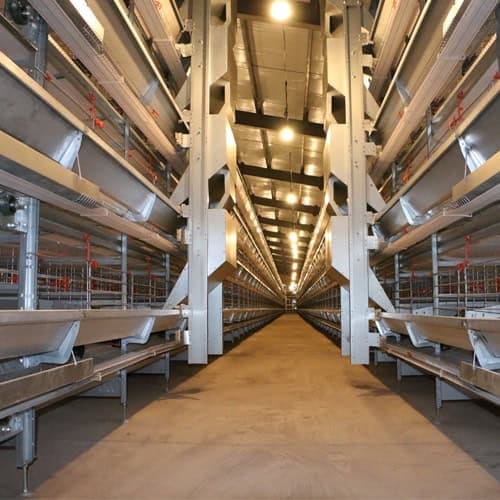
Manure belts under each tier are part of why H-type works at higher density. The belt is not an optional accessory you add later if the house was never designed for it.

A-type layer cages
An A-type layer cage system uses a stepped frame. Birds are easier to see from the walkway, and many mid-size or open-sided houses can take it without a high ridge. Manure more often drops through and is scraped, rather than traveling on long belts. Birds per square meter of house floor are typically lower than a comparable H-type stack. It fits staged investment and houses that are already standing and not very tall.
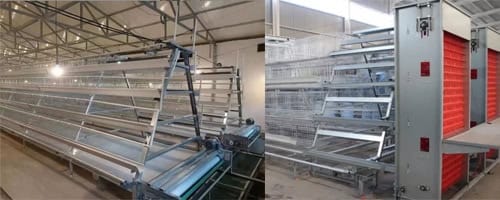
| Decision point | H-type | A-type |
|---|---|---|
| House height | Needs stacked height and top-tier access | Fits many lower houses |
| Hens per floor plate | Usually higher | Usually lower |
| Egg and manure automation | Belts are the normal package | Often trays or shorter collection |
| Daily inspection | Upper tiers need light and planned access | Easier visual check from the aisle |
| When it fits | Larger capacity, tight land | Smaller or mid-size houses |
Floor layer systems and nest boxes
Not every egg farm runs cages. A floor layer house still needs a defined egg path. That path is the nest box—automatic roll-away nests on a commercial line, or manual nests on a smaller house. Without nests, eggs land in litter and collection labor jumps.
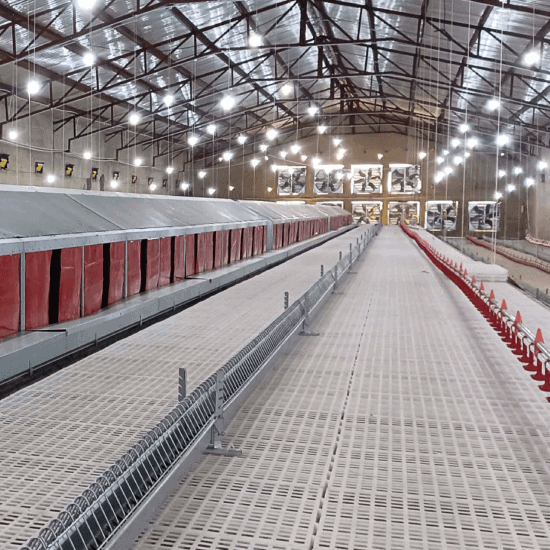
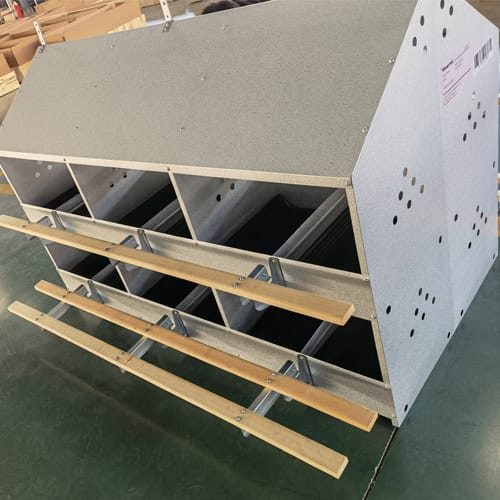
If the drawing says floor layers, specify nest type and nest-to-hen ratio in the same inquiry as feeders and drinkers. Adding nests after placement is slower and dirtier than designing them in.
How to choose before you request a quote
1. Confirm the house is for eggs, not meat.
2. Measure eave height, length, and width.
3. Choose H-type, A-type, or floor + nests against that building—not against a catalog photo.
4. Decide collection: belt, elevator, tray, or nest box.
5. Match manure handling to the frame.
6. Size ventilation to the finished house, then ask for one package quotation.
The expensive mix-up is sending a broiler-cage or broiler-floor list into an egg house. There is no egg roll-out on a meat cage, and a pan line does not replace nest boxes.
FAQ
What equipment do I need for a commercial egg farm?
Housing for layers, feeding, nipple drinking, an egg collection path, manure handling, and house ventilation. Nest boxes belong on floor houses; sloped cage floors and belts belong on cage houses.
Should I choose A-type or H-type cages?
Choose H-type when the house is tall enough and you want stacked density plus belts. Choose A-type when the house is lower, the budget is staged, or visual inspection from the aisle matters more than maximum birds per footprint.
Can I produce eggs on the floor?
Yes. Floor layer houses are used commercially, but they need nest boxes and more walking labor than a cage belt line.
Is egg farming equipment the same as broiler equipment?
No. Layer cages and nest boxes are built around egg flow. Broiler lines are built around grow-out and harvest.
Need an egg-house equipment list?
Send hen numbers, house dimensions, climate or country, and whether you want cages or floor nests. Weifang Splendid will map an A-type, H-type, or floor package.