How Farms House Roosters with Hens: Breeder Floor Systems and Nests
- Commercial farms almost never run a “rooster-only farm.” Roosters belong in parent-stock (breeder) houses with hens, nests, and separate-sex feeding.
- Table-egg layer cages do not need roosters. Hens lay without males. Roosters are for fertile hatching eggs.
- Meat broilers are usually mixed-sex in one grow-out house. That is not a breeding operation and does not use nest boxes.
- A breeder package is slats or litter + scratch area + nest boxes + hen chain or pans + raised male feeders + nipples.
Searches for rooster farms mix backyard flocks with commercial parent stock. On a commercial site, roosters are breeders housed with hens so the farm can collect fertile eggs. Weifang Splendid supplies floor breeder layouts: chain feeding, nipple drinking, slats, and automatic or manual nest boxes.
Three different “rooster” situations
| Operation | Are males and females together? | What the house needs |
|---|---|---|
| Broiler or layer breeders (parent stock) | Yes, in the production house | Nests, slats/scratch, separate-sex feed |
| Commercial table-egg layers | No roosters in the cage house | A-type or H-type cages, egg belts |
| Commercial broiler grow-out | Usually mixed-sex meat birds | Pans and nipples; no breeding nests |
Industry parent-stock guides commonly place about 8–10 males per 100 females at the start of lay, then manage the ratio as males are culled or spiked. That is a typical range from breeder handbooks, not a price or a guarantee. Too many males raise injury and floor eggs; too few cut fertility.
How a commercial breeder house is built
A typical broiler-breeder production house is a floor system. Raised slats often sit on both sides. A lower scratch (litter) strip runs down the center for mating. Mechanical or manual nests sit on the slats. Hen feed and water run over the slats. Male pans sit in the scratch area and are set higher so hens cannot empty the male ration.
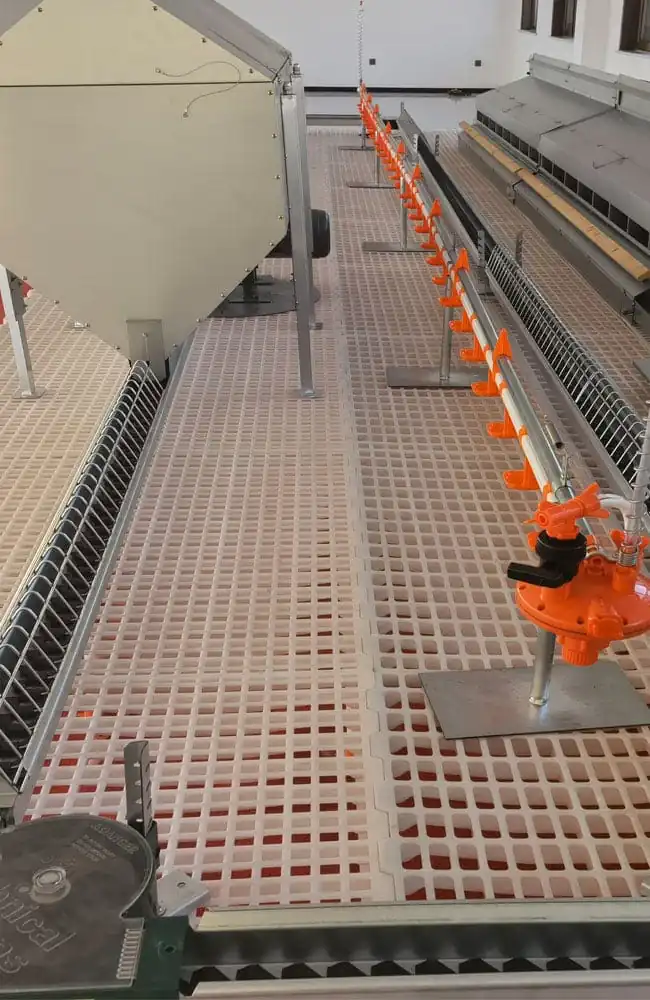
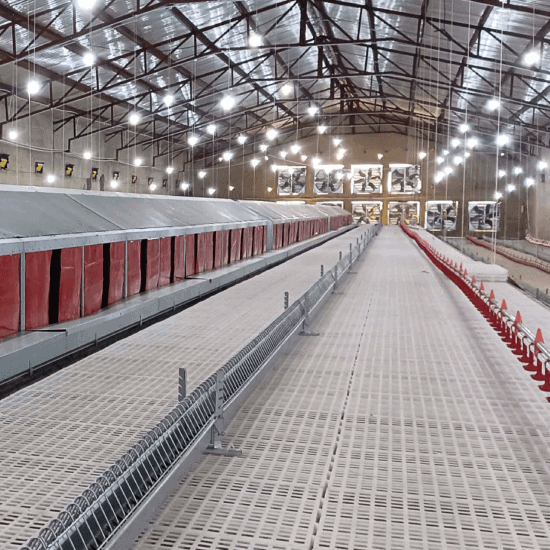
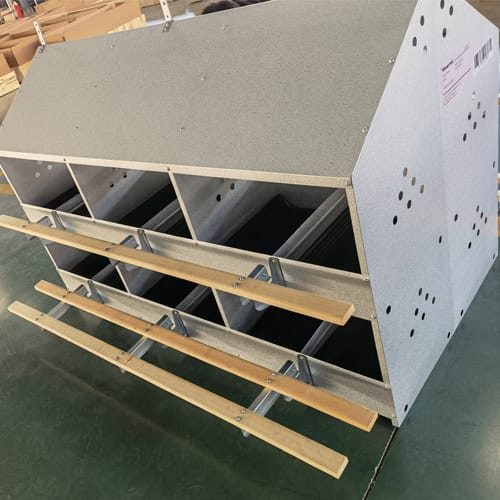
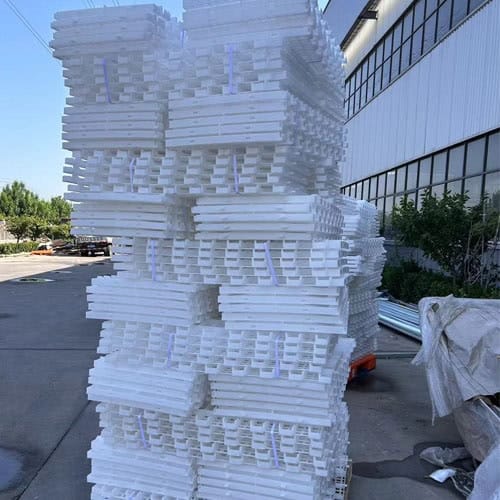
Rearing (pullets and cockerels to about 20 weeks) is often separate so male body weight can be controlled. Production is when males and females share one house. Do not copy a broiler grow-out pan layout into a breeder house and expect fertile eggs.
What “incorporate roosters” actually means
On a breeder farm it means: set a male-to-female ratio, give males their own feed height, keep nests accepted so eggs are not laid in litter, and leave a scratch strip for mating. It does not mean adding roosters to an H-type table-egg cage row.
Some parent farms use cages and artificial insemination. Natural mating on a floor with nests is still the usual broiler-breeder package. Quote the system the farm actually runs.
A mixed-sex broiler house and a breeder house look similar from the road. Inside they are different bills of materials. Broilers need harvest access. Breeders need nests and male feeders.
FAQ
Do commercial farms keep roosters in a separate rooster farm?
Almost never as a standalone product. Males are parent-stock breeders, housed with hens in the production period after a rearing phase that may be sex-separate.
Do table-egg layers need roosters?
No. Commercial cage layers produce infertile eating eggs. Roosters are required only when the farm sells hatching eggs.
Are broiler males and females kept together?
Grow-out flocks are commonly mixed-sex (as-hatched). Some integrators grow sexes separately for uniformity. That is still meat production, not a breeder house.
What equipment does a breeder house need?
Slats or litter plus a scratch area, nest boxes, hen feed lines hens can reach and males cannot empty, raised male feeders, and nipple drinkers.
Planning a breeder floor house?
Send hen and male numbers, house length, width, eave height, and whether nests should be automatic or manual. Weifang Splendid will map a slat, nest, and feeding package.