Poultry Feeding System Price & Buying Guide for Commercial Farms
Choosing the right poultry feeding system is one of the biggest investment decisions for commercial farms. Feed accounts for 60–70% of total production cost, so even small improvements in feed efficiency and waste reduction can dramatically impact profitability. This 2026 price guide provides realistic cost ranges, system comparisons, and practical buying advice for farms of all sizes.
Quick Answer
In 2026, a complete automatic poultry feeding system for commercial farms typically costs between $8,000 and $50,000+. Broiler pan systems range from $8,000–$18,000 for 10k–30k birds, while layer chain systems cost $12,000–$25,000. Prices depend on farm size, automation level, and whether silos are included.
The poultry feeding system price varies depending on farm size, feeding technology, and automation level. Small farms may spend only a few thousand dollars on basic systems, while large commercial poultry farms investing in fully automatic poultry feeding systems with silos and centralized feed distribution can exceed $40,000. Understanding these cost components helps farm owners choose the most cost-effective poultry feeding system.
What Is a Poultry Feeding System?
A poultry feeding system is an automated solution that stores, transports, and distributes feed to birds with minimal human intervention. Modern systems include silos, augers or chains, distribution lines, pans or troughs, motors, and sensors.
Average Poultry Feeding System Price in 2026
| System Type | Farm Size | Estimated Price Range (USD) | Typical Application |
|---|---|---|---|
| Manual feeding | Small farms | $500–$1,500 | Backyard or very small operations |
| Semi-automatic feeding | 5,000–10,000 birds | $2,000–$6,000 | Medium farms |
| Automatic pan feeding system | 10,000–30,000 birds | $8,000–$18,000 | Broiler houses |
| Chain feeding system | Layer farms | $12,000–$25,000 | Cage layer farms |
| Full automatic system with silos | 30,000–50,000+ birds | $20,000–$50,000+ | Large commercial farms |
Main Factors Affecting Poultry Feeding System Cost
Farm Size
Larger farms require more feeding lines, bigger hoppers/silos, and higher-capacity motors.
Feeding Line Length
Longer houses need more powerful motors and stronger chains/augers.
Type of Feeding System
Pan systems for broilers are generally less expensive per bird than chain trough systems for layers.
Automation Level
Basic timer systems are cheaper; full sensor-based systems cost more but deliver greater efficiency.
Material Quality
Hot-dip galvanized components and high-quality motors last longer and reduce long-term maintenance costs.
Cost Example: Feeding System for 10,000 Chickens
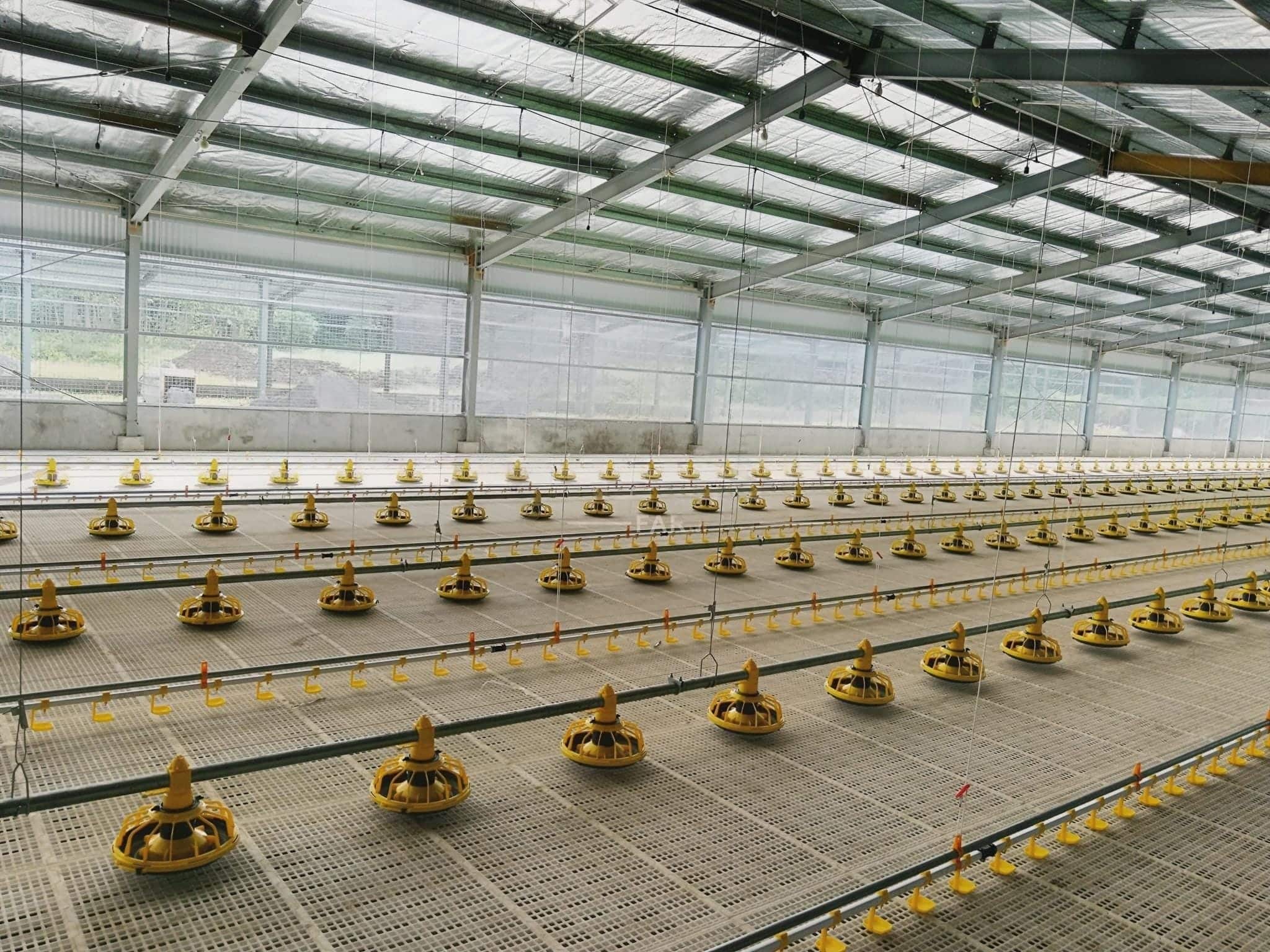
For a 10,000-bird broiler farm, a typical automatic pan feeding system costs $8,000–$12,000. This includes 250–300 pans, one 3–5 ton hopper, and a 1.5–2.2 kW motor.
Mini Cost Calculation Table
| Farm Size | Feeding Lines | Total Price Range | Cost per Bird |
|---|---|---|---|
| 10,000 birds | 2 lines | $8,000–$12,000 | $0.80–$1.20 |
| 30,000 birds | 4–5 lines | $20,000–$35,000 | $0.67–$1.16 |
| 50,000 birds | 6–7 lines | $35,000–$50,000+ | $0.70–$1.00 |
Cost Example: Feeding System for 30,000–50,000 Chickens

For 30,000–50,000 birds, a full automatic system with central silos typically costs $25,000–$45,000. This includes multiple feeding lines, larger silos (8–12 tons), and advanced controls.
How to Choose the Right Feeding System for Your Farm
- Match system type to bird type (pan for broilers, chain for layers)
- Calculate required feeding lines based on house length and bird density
- Choose hopper/silo size based on daily feed consumption
- Consider total cost of ownership, not just initial price
- Request a professional layout drawing from the supplier
Common Buying Mistakes
- Focusing only on the lowest price instead of long-term reliability
- Undersizing hoppers or motors for the farm scale
- Choosing incompatible components for the feed type
- Ignoring after-sales service and spare parts availability
Why Automatic Feeding Systems Reduce Farm Costs
Automatic systems reduce labor by 60–80% and feed waste by 8–15%. Better uniformity also improves FCR and overall productivity, delivering strong ROI within 8–14 months for most commercial farms.
Conclusion
A well-chosen automatic poultry feeding system is a high-return investment for commercial farms in 2026. Understanding current pricing, component options, and design factors helps farm owners and distributors make informed decisions that improve efficiency and profitability for years to come.
Need a Customized Poultry Feeding System Quote?
Get a Custom Poultry Feeding System Quote →
Related Articles
- How an Automatic Chicken Feeding System Reduces Labor and Feed Waste in Modern Poultry Farms
- Key Components of an Automatic Poultry Feeding System
- Poultry Feeding System for Commercial Farms
- Poultry Feeding System Design for 10,000–50,000 Chickens
By Caroline, Senior Poultry Equipment Specialist at Weifang Splendid Machinery Equipment Co., Ltd. (18 years global experience in broiler & layer systems).
• USDA Livestock & Poultry Outlook, Feb 2026
• Commercial Poultry Feeding System Reports 2025-2026
• Field performance data from commercial layer and broiler farms worldwide