Optimizing Automated Egg Collection Systems to Minimize Breakage (2026)
In modern H-type multi-tier layer cage houses, the central egg collection system is one of the most critical components affecting profitability. Proper configuration of belt tension, lifter speed, and transfer points is essential to keep breakage rates below 0.5% and maintain premium egg grading ratios.
Quick Answer
Maintaining egg belt speeds between 2–4 m/min, combined with synchronized VFD-controlled vertical egg lifters and soft buffer guides at transfer points, can reduce breakage rates to under 0.5%. Precise tension control and smooth acceleration curves prevent collisions and rolling impacts throughout the collection process.
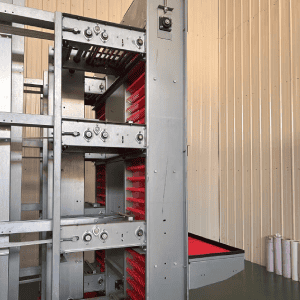
The Hidden Bottom-Line Killer: How Mechanical Collision Multiplies Soft-Shell Losses
Even minor impacts during belt-to-lifter transfers or speed mismatches between longitudinal and cross conveyors cause micro-cracks that escalate into significant financial losses. In high-density multi-tier systems, these issues compound rapidly across thousands of eggs per hour.
Step 1: Calibrating Polypropylene Belt Tension and Alignment
Proper belt tension prevents slipping and edge fraying while avoiding excessive tightness that causes eggs to roll or collide. Automatic tracking rollers and periodic alignment checks ensure long longitudinal egg belts remain stable and centered throughout daily operation.
Calibration Standards for Central Egg Collection Conveyors (2026 Engineering Data)
| Conveyor Component | Recommended Operating Speed (m/min) | Ideal Belt Tension Metric | Transfer Point Guard Type | Targeted Breakage Reduction Impact |
|---|---|---|---|---|
| Longitudinal Egg Belt | 2.0–3.5 | Medium (auto-adjusted) | Soft plastic buffers | Reduces rolling cracks by 60% |
| Vertical Egg Lifter | 1.8–3.0 | VFD synchronized | Flexible claw + cushion | Minimizes drop impact by 75% |
| Cross Conveyor | 2.5–4.0 | Matched to lifter | Speed ramp zones | Prevents scramble jams |
| Main Central Belt | 3.0–5.0 | High stability | Anti-collision guides | Overall breakage <0.5% |
Step 2: Fine-Tuning Multi-Tier Vertical Egg Lifters and Cross-Conveyor Transits
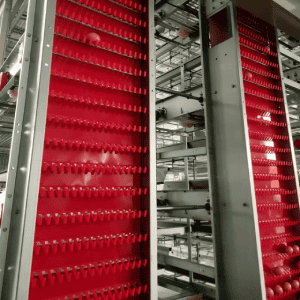
Vertical lifters must use soft-touch mechanical fingers or cushioned buckets that gently catch eggs from each tier. Precise alignment with flexible plastic guides at transfer points prevents blunt drops and ensures smooth transition to the cross conveyor.
Step 3: VFD Speed Matching and Anti-Scramble Electronic Tuning
Program the central control panel with VFD drives to synchronize speeds across all sections. Smooth acceleration curves and real-time monitoring prevent "egg scrambling" events where faster belts overload transfer points, significantly reducing mechanical collisions.
Conclusion
Well-calibrated automated central egg collection systems are essential for maintaining high grading ratios and profitability in commercial layer operations. Precise belt tension, synchronized speeds, and soft-transfer technology can reliably keep breakage rates below 0.5%.
Need a Free Turnkey Layer Farm Automation & High-Capacity Central Egg Collection System Blueprint Quote?
Our engineering team provides complete egg collection system design, calibration support, and turnkey integration for H-type multi-tier layer cage projects.
Related Articles
- How to Reduce Egg Breakage Rate Under 0.5% in Automatic Collection Systems
- Commercial Steel Structure Poultry House Design: Optimal Dimensions for Multi-Tier Cages
- How Automatic Egg Collection Systems Work in Modern Layer Farms
By Caroline, Senior Poultry Equipment Specialist at Weifang Splendid Machinery Equipment Co., Ltd. (18 years global experience in automated layer cage systems).
• Commercial Layer Cage Egg Collection Engineering Standards 2025-2026
• Automated Egg Handling System Performance Data
• Field reports from high-capacity central egg collection installations