Calibrating Minimum Ventilation and Static Pressure for Poultry Brooding Periods
During the critical brooding period (day 0–14), precise control of minimum ventilation and static pressure determines chick survival, gut health, and future laying performance. Incorrect settings can cause chilling stress or rapid ammonia buildup within hours.
Quick Answer
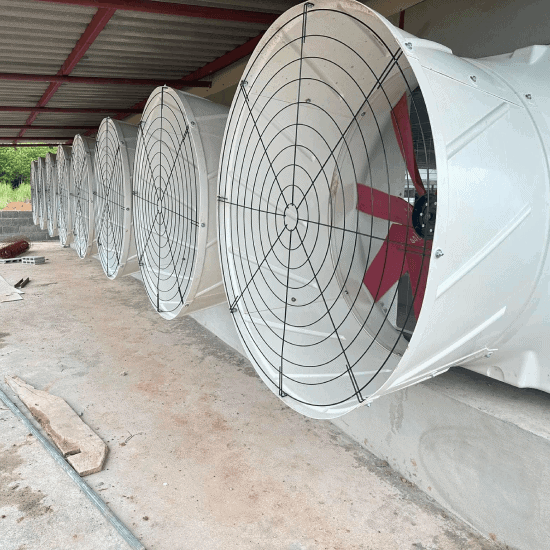
Effective brooding ventilation uses short timer cycles on small exhaust fans combined with 20–35 Pa negative static pressure. This forces incoming cold air to travel along the ceiling, mix with warm air, and descend gently — protecting day-old chicks from direct drafts while maintaining oxygen and removing moisture/CO₂.

The Delicate Balance of Brooding Airflow: Warmth vs. Fresh Oxygen
Day-old chicks require a stable 32–33°C environment. However, without adequate air exchange, moisture from respiration and manure quickly raises humidity and ammonia levels inside the cage. This leads to respiratory stress and increased early mortality if not properly managed.
Step 1: Programming Timer-Based Minimum Ventilation Cycles
Minimum ventilation during brooding should run on short, frequent cycles rather than continuous operation. A common starting point is 60 seconds on and 240 seconds off, gradually increasing runtime as chicks grow and produce more moisture and CO₂.
Minimum Ventilation & Static Pressure Parameters for Chick Brooding (2026 Standards)
| Chick Age (Days) | Target Temperature (°C) | Minimum Ventilation Rate (CFM/bird) | Target Static Pressure (Pa) | Air Inlet Opening (%) |
|---|---|---|---|---|
| 0–3 | 32–33 | 0.05–0.08 | 25–35 | 15–25 |
| 4–7 | 30–32 | 0.08–0.12 | 22–30 | 20–30 |
| 8–11 | 28–30 | 0.12–0.18 | 20–28 | 25–35 |
| 12–14 | 26–28 | 0.18–0.25 | 18–25 | 30–40 |
Step 2: Calibrating Negative Static Pressure to Avoid Chilling Drafts
High negative static pressure forces incoming air to enter at high velocity along the roof or ceiling. This allows cold outside air to warm up before descending to chick level. If static pressure is too low, cold air drops directly onto the chicks, causing chilling and uneven distribution.
Managing Ammonia and Humidity in Early Brooding Cages
Automatic pressure controllers help maintain stable negative pressure as manure accumulates on the belt. This effectively removes moist air and ammonia from the cage environment, keeping levels below 10 ppm during the first two weeks and supporting uniform chick growth.
Conclusion
Proper calibration of minimum ventilation cycles and static pressure during brooding is one of the highest-ROI management practices in poultry production. Correct settings protect chick health, reduce early mortality, and establish strong performance for the entire flock cycle.
Need a Free Turnkey Poultry House Environmental Design & Brooding Equipment Quote?
Our engineering team provides complete brooding ventilation design, controller programming, and equipment selection tailored to your climate and house type.
Request Your Free Turnkey Poultry House Environmental Design & Brooding Equipment Quote →
Related Articles
- Why H-Type Multi-Tier Broiler Brooding Cages Deliver Higher Uniformity (2026)
- How to Adjust Automated Feeding and Drinking Lines for Day-Old Chicks (2026)
By Caroline, Senior Poultry Equipment Specialist at Weifang Splendid Machinery Equipment Co., Ltd. (18 years global experience in poultry climate control systems).
• International Poultry Brooding Engineering Standards 2025-2026
• Commercial Pullet Field Performance Records
• Field data from automated brooding ventilation installations