Automated Egg Production: How a Large House Moves Eggs, Manure, Air and Water
- Automated egg production on a commercial farm is belts, drinkers, fans and a clock — not a robot packing carton in the aisle.
- The environmental load of a large egg house is wet manure, ammonia, spent air and wash water. Those four leave through equipment, or they stay in the shed.
- Cage type is chosen on the equipment page. This page is the plant around that choice: collection, manure, climate, silo.
- Send hen numbers, house size, climate or country. Weifang Splendid maps one line to that shell.
A large egg farm is a materials plant that happens to hold hens. Mash comes from a silo. Eggs leave on a belt or a tray run. Droppings leave on a belt or a scraper. Heat and moisture leave through a fan wall. That package is what buyers mean by automated egg producers when they are specifying a house, not a software demo.

What a large egg house puts into the air and the yard
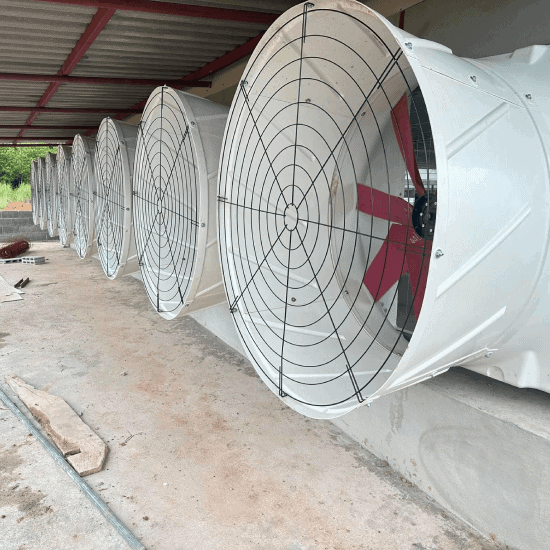
Scale does not invent new waste. It concentrates four streams: manure volume, ammonia if that manure stays wet, exhaust air from the tunnel or the side wall, and water from drinkers and wash-down. Neighbours and auditors notice those streams. So does the flock: ammonia and heat cut lay before a complaint arrives from the gate.
Management is not a separate “green” chapter. It is whether the manure belt runs on a clock, whether pads and fans keep the top tier breathable, and whether dirty water has a pit instead of a slope into the yard. Invented percentage cuts do not belong here. The farm either has a path for each stream or it does not.
| Load from the house | What the line must do | If the path is missing |
|---|---|---|
| Manure under the cages | Belt or scraper on a set interval, then a pad or store outside | Ammonia, flies, dirty eggs |
| Heat and moisture | Fan wall and pads sized to the stack, not only floor area | Top-tier heat, wet litter or wet belts |
| Drinkers and wash water | Dosed line plus a pit or drain that does not flood the yard | Mud at the door, wet manure again |
| Dust and spent air | A known exhaust wall, not a random gable opening | Complaints downwind, uneven air inside |

What “automated egg production” is on the invoice
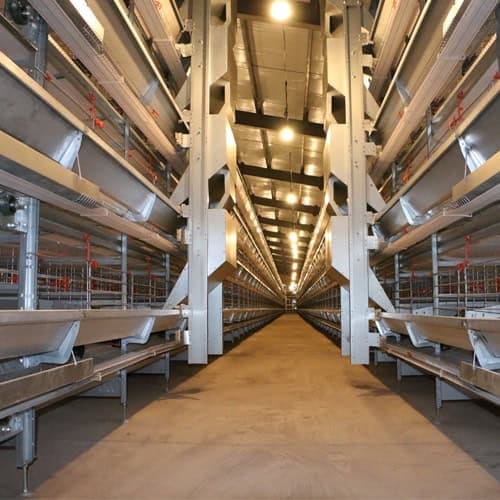
New hardware in this trade is still the same four jobs, done with fewer people on the tier: eggs travel, manure travels, water stays at the beak, air stays even. Controllers and sensors help only if those four paths exist. A house that buys a panel and leaves manure in place is not automated. It is monitored.
| Job | On an automated egg line | Still a person |
|---|---|---|
| Collect eggs | Belt to one packing point | Grade, pack, pull floor eggs if any |
| Clear manure | Belt or scraper on a timer | Move the store, wash the dump |
| Feed | Silo to chain or trough | Order bins, watch bridging |
| Climate | Fans, pads, a clock the house keeps | Walk the top tier after a storm |
Not this page. A-type versus H-type frames, first-flock start order, and which gable is the egg end are already written. Use those pages for layout. Use this page for the four streams a scale house must move.
What to send before you call the house automated
Hens per house. Length, width, eave height. Climate or country. How manure can leave — belt into a store, or a pit. Whether a silo and a fan wall sit on the same invoice as the cages. Destination rules for conventional cages belong on that list; they are not a statute in this article.
FAQ
What is automated egg production on a commercial farm?
Eggs, manure, feed and air move without a person carrying them the length of the row. Controllers only help after those paths exist.
How do large egg farms manage environmental load?
They give manure, exhaust air and wash water a path out of the house, then a place to sit outside. Wet manure left under cages is ammonia, not a paperwork problem.
Do I need robots to be an automated egg producer?
No. A working belt, a timed scraper, dosed water and a fan wall are the line. Packing robots are a later room.
What do I send for a quote?
Hen numbers, three building sizes, climate or country, and how manure can leave the house.
Send the four streams, not a photo of a panel.
Hens, house sizes, climate or country, belt or pit. Weifang Splendid will set collection, manure and air to that shell.