Why Hot-Dip Galvanized Layer Cages Are Most Cost-Effective for Large Farms
Hot-dip galvanized layer cages deliver the lowest long-term cost of ownership for large commercial farms. Their thick zinc-iron alloy coating provides superior resistance to the aggressive uric acid and ammonia environment inside layer houses, extending service life to 15–20 years versus 4–6 years for electro-galvanized cages.
Quick Answer
Hot-dip galvanized layer cages last 15–20 years in high-humidity, high-ammonia environments, while electro-galvanized cages typically require replacement every 4–6 years. Over a 15-year period, hot-dip cages reduce total cage investment by 60–70% and eliminate multiple replacement downtimes, delivering the highest ROI for large-scale layer operations.
The Hidden Chemical Threat in Enclosed Layer Houses
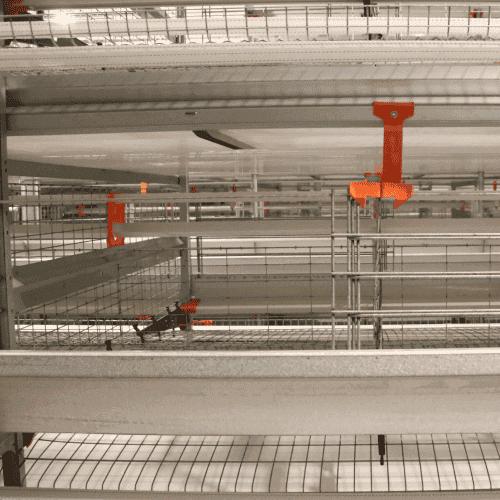
Layer houses generate constant high concentrations of ammonia and uric acid from manure. These acids rapidly corrode thin zinc coatings on electro-galvanized mesh, causing rust within 3–5 years. Hot-dip galvanization forms a thick metallurgical alloy layer that withstands this aggressive environment far longer.
Hot-Dip vs. Electro-Galvanized: The Manufacturing Process Difference
Hot-dip galvanizing immerses the steel mesh in 450°C molten zinc, creating a robust zinc-iron alloy layer 80–120 microns thick. Electro-galvanizing applies a thin electrolytic zinc coating of only 8–20 microns that offers minimal protection against acid corrosion in poultry environments.
Hot-Dip Galvanized vs. Electro-Galvanized (Cold) Layer Cages (2026 Engineering Data)
| Parameter | Hot-Dip Galvanized | Electro-Galvanized (Cold) |
|---|---|---|
| Zinc Coating Density g/m² | 275–600 | 20–60 |
| Corrosion Resistance | Excellent (acid & ammonia) | Poor (quick rusting) |
| Salt Spray Test Performance | >1,000 hours | 120–240 hours |
| Physical Surface Smoothness | High (zinc bloom) | Medium |
| Average Lifespan | 15–20 years | 4–6 years |
| Initial Cost Factor | 1.0x | 0.65–0.75x |
| 15-Year ROI | Best (lowest total cost) | Poor (multiple replacements) |
15-Year Financial Analysis: Initial Investment vs. Lifespan ROI
Although hot-dip galvanized cages have a higher upfront cost, they eliminate the need for replacement every 4–6 years. For a 100,000-bird farm, the total 15-year cost of ownership for hot-dip cages is 60–70% lower than electro-galvanized systems due to avoided downtime, labor, and repeated capital expenditure.
How to Identify Premium Hot-Dip Galvanized Poultry Mesh
- Inspect weld spots for uniform thick zinc coverage with no bare steel
- Check for characteristic zinc bloom and spangle pattern on the surface
- Measure coating thickness (minimum 80 microns on all surfaces)
- Confirm full immersion process certification from the manufacturer
Conclusion
Hot-dip galvanized layer cages provide the most cost-effective long-term solution for large commercial farms. Their superior corrosion resistance dramatically reduces replacement frequency and total ownership cost while maintaining structural integrity and bird welfare over 15–20 years.
Need a Free Turnkey Layer Cage Layout Design & Equipment Quote?
Our engineering team provides complete hot-dip galvanized layer cage layout design and turnkey equipment solutions tailored to your farm size and climate.
Request Your Free Turnkey Layer Cage Layout Design & Equipment Quote →
Related Articles
- Choosing the Right Manure Removal Belt Material: PP vs. PVC in Automatic Layer Cages (2026)
- How to Adjust Automated Layer Cage Feeding Trolleys for Uniform Nutrition (2026)
- Ideal Temperature and Humidity for Layer Chicken Houses
By Caroline, Senior Poultry Equipment Specialist at Weifang Splendid Machinery Equipment Co., Ltd. (18 years global experience in layer systems).
• Global Poultry Machinery Standards 2025-2026
• Metal Anti-Corrosion Engineering Field Data
• Commercial layer farm performance data from hot-dip galvanized installations