Why Is My Broiler Litter Always Wet? (Main Causes & Fast Solutions)
Wet litter is one of the most expensive and dangerous problems in commercial broiler houses. When litter stays wet for days, ammonia levels rise, footpad dermatitis explodes, birds sit more, feed intake drops, FCR worsens and mortality climbs. For a 20,000-bird farm, persistent wet litter can easily add $3,000–$8,000 in extra costs per cycle through poorer performance and higher medication use.
Quick Answer
Persistent wet litter usually indicates a ventilation, water management, or stocking density problem. In most commercial broiler houses, excessive moisture starts around drinker lines and gradually spreads when airflow and humidity control are insufficient.
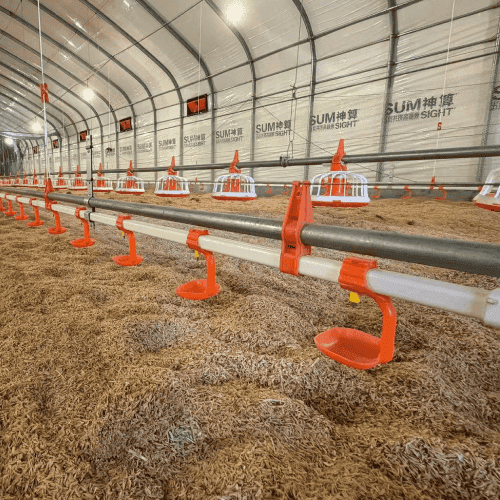
Early Warning Signs of Wet Litter Problems
- Dark, clumpy litter around drinker lines
- Strong ammonia smell inside the house
- Birds sitting or huddling on the floor
- Footpad dermatitis (red, swollen footpads)
- Increased water-to-feed ratio
- Higher than normal mortality in the last week of the cycle
How Wet Litter Hurts Broiler Performance
Wet litter creates a chain reaction of problems: high ammonia damages respiratory tracts, footpad lesions cause pain and reduced feed intake, birds sit more instead of eating, humidity rises, and ventilation becomes less effective.
Main Causes of Wet Litter in Broiler Houses
1. Nipple Drinker Pressure & Leakage
Too high or too low drinker pressure causes excessive water spillage. Ideal pressure is 20–25 cm water column for most commercial systems.
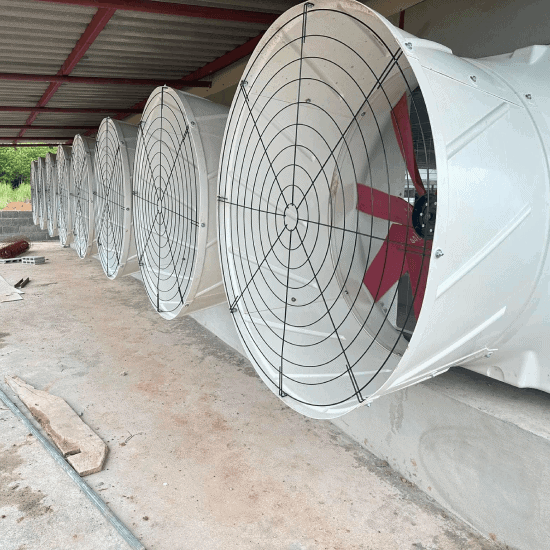
2. Insufficient Tunnel Ventilation Air Speed
When air speed at bird level is below 2.5 m/s, moisture cannot be removed fast enough, especially in hot and humid climates.
3. High Stocking Density
At densities above 15 birds/m² without perfect ventilation and drinker management, litter quickly becomes wet.
4. High Humidity & Poor Cooling Pad Performance
Dirty or undersized cooling pads raise incoming air humidity and make litter drying almost impossible.
5. Feed Formulation Issues (High Salt or Poor Digestibility)
Excess salt or undigested nutrients increase water intake and excretion, leading to wet litter.
Step-by-Step Wet Litter Troubleshooting Checklist
| Problem | Likely Cause | Fast Solution |
|---|---|---|
| Wet litter around drinkers | High drinker pressure or leaks | Adjust pressure to 20–25 cm, replace faulty nipples |
| Whole house wet litter | Low air speed | Increase tunnel fan speed to 2.5–3.5 m/s at bird level |
| Wet litter + high ammonia | Poor ventilation + high humidity | Clean cooling pads and run fans earlier |
| Wet litter in last week | High salt in feed | Check feed formulation and reduce salt |
Best Humidity & Temperature Targets for Dry Litter
| Age (days) | Target Temperature (°C) | Target Humidity (%) |
|---|---|---|
| 0–14 | 29–34 | 50–60 |
| 15–28 | 24–28 | 50–65 |
| 29–42 | 20–24 | 55–70 |
Real Farm Example
A 22,000-bird farm in Southeast Asia had litter moisture consistently above 35%. After adjusting nipple pressure, increasing bird-level air speed to 3.0 m/s and cleaning cooling pads, litter moisture dropped to 22% within 4 days. Footpad dermatitis cases fell by 70% in the same cycle.
Conclusion
Wet litter is not just a nuisance — it is a major profit killer in commercial broiler houses. By focusing on drinker management, tunnel ventilation air speed at bird level, and daily litter monitoring, farms can keep litter dry, reduce ammonia, protect foot health, and maintain target performance.
Need Professional Help with Wet Litter Problems?
Our engineering team provides complete farm audits, drinker system calibration, tunnel ventilation optimization, and litter management recommendations for 10,000–30,000 bird broiler houses.
Request Your Free Wet Litter & Ventilation System Audit →
Related Articles
- Why Are My Broilers Panting? (Heat Stress Causes & Tunnel Ventilation Fixes)
- Why Did My Broiler FCR Increase Suddenly?
By Caroline, Senior Poultry Equipment Specialist at Weifang Splendid Machinery Equipment Co., Ltd. (18 years global experience in broiler systems).
• USDA Livestock & Poultry Outlook, Feb 2026
• Commercial Broiler Equipment Reports 2025-2026
• Field data from commercial broiler floor farms