Why Are My Broilers Panting? (Heat Stress Causes & Tunnel Ventilation Fixes)
When broilers start panting in the middle of the day, every commercial farmer knows trouble is coming. Panting is the first visible sign of heat stress — and if not fixed quickly, it leads to reduced feed intake, higher FCR, wet litter, increased mortality and thousands of dollars in lost profit per cycle. In 2026, with hotter summers and larger houses, understanding why your broilers are panting and how to fix it with proper tunnel ventilation is critical for 10,000–30,000 bird floor systems.
Quick Answer
Broilers pant when house temperature rises above 28–30°C or air speed drops below 2.0 m/s. The fastest fix is increasing tunnel ventilation air speed to 2.5–3.5 m/s using exhaust fans and cooling pads. Most farms see panting stop within hours and FCR recover within one cycle when ventilation is properly matched to stocking density and outside temperature.
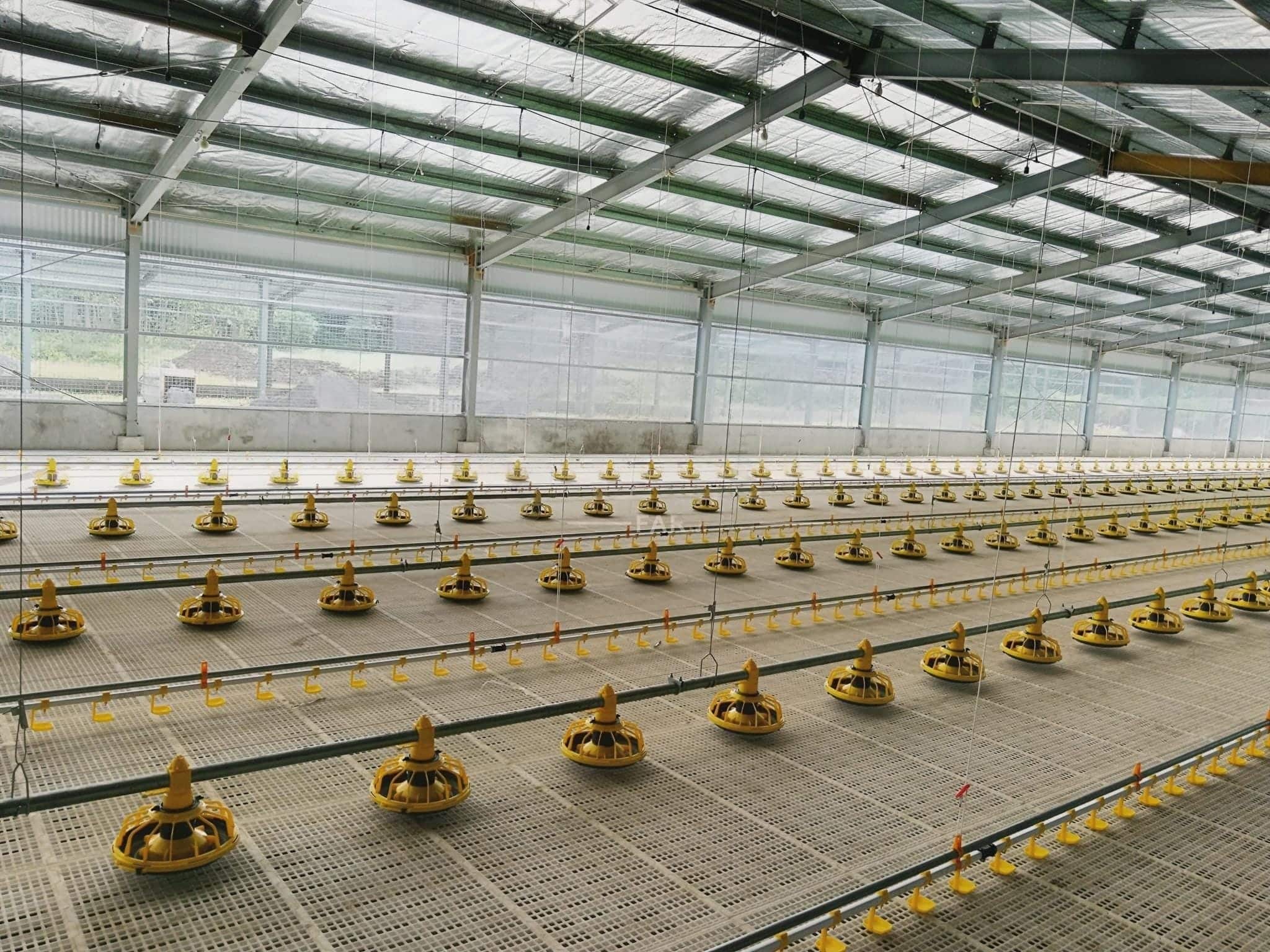
Early Warning Signs of Heat Stress in Broilers
- Birds panting before noon
- Crowding near air inlets and side walls
- Reduced feed intake during the hottest hours
- Wet litter around drinker lines
- Uneven bird distribution across the house
- Higher water-to-feed ratio
What Happens If Broiler Panting Continues Too Long?
Prolonged panting causes severe performance losses in commercial broiler farms. Birds reduce feed intake, drink excessively, and divert energy away from growth. Within days, farmers often see worsening FCR, uneven body weight, wet litter, and increased mortality. In severe heat stress events, mortality can rise rapidly during afternoon hours if tunnel ventilation and cooling systems are insufficient.
How Tunnel Ventilation Solves Panting Problems
Tunnel ventilation creates high-speed airflow (2.5–3.5 m/s) that produces a wind-chill effect, removing heat from the birds and lowering effective house temperature by 8–12°C even when outside air is 35–38°C. Air speed should always be measured at bird level rather than near the ceiling. Combined with evaporative cooling pads, it is the most effective commercial solution for preventing heat stress in broiler floor systems.
Best Temperature for Broilers by Age
| Age (days) | Recommended Temperature (°C) |
|---|---|
| 0–7 | 32–34 |
| 8–14 | 29–31 |
| 15–28 | 24–28 |
| 29–42 | 20–24 |
Top Causes of Broiler Panting & Fast Fixes (2026 Data)
Heat stress in commercial houses is almost always a combination of hardware capacity and management. Review this technical guide to locate and fix ventilation shortfalls:
| Root Cause | Technical Risk | 2026 Tunnel Ventilation Solution |
|---|---|---|
| Low Air Speed (<2.0 m/s) | Traps body heat around birds | Increase target wind speed to 2.5–3.5 m/s at bird level. |
| High Stocking Density | Spikes heat load above 15 birds/m² | Turn on advanced fan stages earlier via smart controllers. |
| Dirty/Clogged Cooling Pads | Restricts static airflow capacity | Perform regular cooling pad pressure washing to remove scale. |
| Improper Negative Pressure | Creates dead zones near side walls | Calibrate automatic air inlets to maintain 18–25 Pa static pressure. |
Conclusion
Broiler panting is an urgent warning sign that your ventilation system is not keeping up with heat load. By implementing proper tunnel ventilation, correct air speed, and good cooling pad management, commercial broiler floor farms can prevent heat stress, protect FCR, and maintain high performance even in hot weather.
Need Professional Help with Broiler Heat Stress?
Our engineering team provides complete farm audits, tunnel ventilation system design, cooling pad upgrades, and controller programming to eliminate panting and protect your flock.
Request Your Free Heat Stress & Ventilation System Audit →
Related Articles
By Caroline, Senior Poultry Equipment Specialist at Weifang Splendid Machinery Equipment Co., Ltd. (18 years global experience in broiler systems).
• USDA Livestock & Poultry Outlook, Feb 2026
• Commercial Broiler Equipment Reports 2025-2026
• Field data from commercial broiler floor farms