Nipple Lines and Pan Feeders in a Poultry House
- A nipple drinker line and a pan or chain feeder are laid as pairs. Birds should not walk more than about 3 m to water.
- A working guide is 8 to 12 birds a nipple on broilers, tighter on breeders. Nipples sit no more than about 35 cm apart.
- A wet strip under a line is pressure, an unlevel pipe, or a worn nipple. It loads the litter, the slat, or the manure belt.
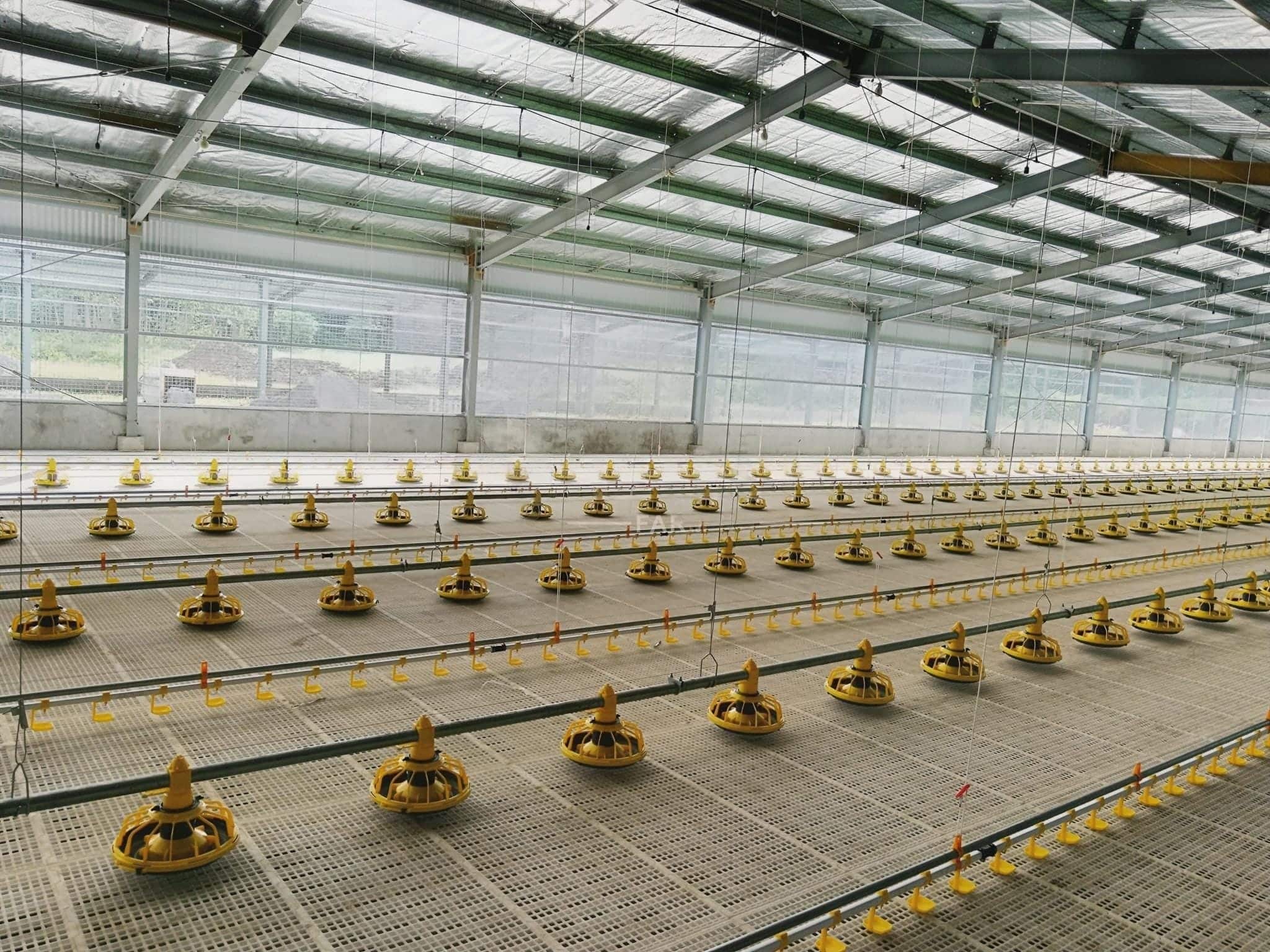
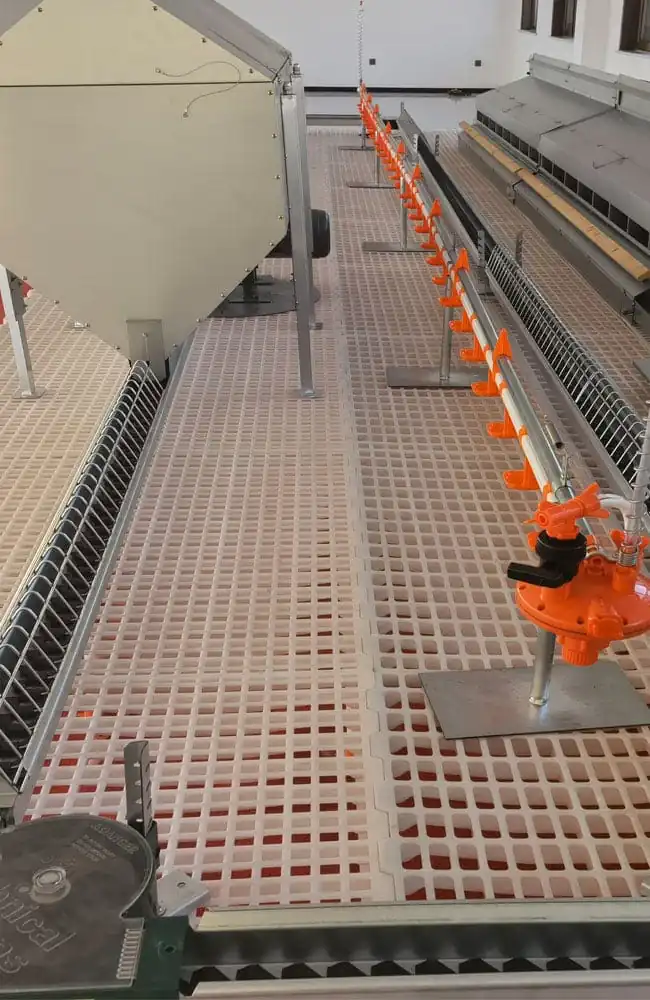
Weifang Splendid runs the water and the feed as one layout. Floor broilers take pan feeders and nipple lines that winch up with the flock. Floor breeders take a chain and nipples on the slat. Cage rows take a nipple in the cage and a trough or chain on the front. The count of lines follows house width, not a stock kit.
How many lines
A broiler house of about 12 to 15 m wide commonly takes three or four drinker lines, one for every 2.5 to 3.5 m of width. Feeder lines sit between them so a bird is never far from either. On a cage row the nipple is in the cage, one line a tier, and the feeder is the trough on the front. Breeders on the floor keep the drinker off the nest face so males do not queue the hens.
Birds per nipple is a guide, not a stamp. Cobb puts 8 to 12 on broilers and 8 to 10 on a low-flow breeder nipple, with nipples no more than about 35 cm apart. High-flow nipples, about 80 to 90 ml a minute, often carry a drip cup. Low-flow, about 50 to 60 ml, usually do not. Weifang Splendid sets the nipple and the cup from the bird and the floor under it. A number off a poster is checked against the row length you send.
Height and leaks
At placement the nipple sits at chick eye level. After that the bird drinks with the head at about 45 degrees, feet flat. Too low and water runs off the beak onto the floor. Too high and the smaller birds stop drinking, then stop eating. Floor lines winch. Cage lines are fixed to the tier, so the nipple height is part of the cage, not a daily crank.
A wet strip is the tell. High pressure, a sag in the pipe, or a nipple that no longer seals. On litter it cakes. On a slat it loads one span. On an H-type belt it wets the manure the belt was meant to carry dry. The fix is the line: level, pressure on the sight tube, nipples that shut. A thicker belt does not dry a leaking nipple.
| House | Feed | Water |
|---|---|---|
| Floor broiler | Pan line, winched | Nipple line, winched. About 8–12 birds a nipple. |
| Floor breeder | Chain on the slat | Nipple on the slat, off the nest face. |
| Cage | Trough or chain on the front | Nipple in the cage, one line a tier. |
Pans and the gap between them
A pan is a circle of birds. Space between pans has to let another bird pass, or the line becomes a wall. On a breeder slat the last line sits back from the slat edge so a hen can step off without being pushed. Chain on breeders runs a loop. Pan on broilers runs a line from the hopper. Both fill from the silo. The pan count follows birds and house length, the same way nipple count does.
What to send
Birds, broilers or breeders or layers, floor or cage, house width and length. Weifang Splendid marks line count, nipple spacing, and pan or chain from that.
FAQ
How many birds to a nipple?
A working guide is 8 to 12 on broilers, 8 to 10 on breeders. Confirmed on the row.
How far apart are the nipples?
No more than about 35 cm. A bird should not walk more than about 3 m to water.
Why is the floor wet under the line?
Pressure, a sag, or a nipple that does not seal. It is a line fault, not a belt or slat fault.
What should I send?
Birds, floor or cage, house width and length.