Layer Farming After Placement: Feed, Water, Air, Eggs and Manure
- A running layer flock depends on feed reaching every tier, nipples at the right height, and air that can actually cool the house.
- The failures that stop lay are feed gaps, wet manure under the row, cracked eggs on the belt, and a hot afternoon with dry pads.
- Fix those with a silo and trough, nipples, fans and pads, an egg path and a manure path. Weifang Splendid sizes that list to bird numbers and climate.
A layer farm stays in lay only if feed, water, air, eggs and manure keep moving. Weifang Splendid sizes that list to bird numbers, house size and climate.
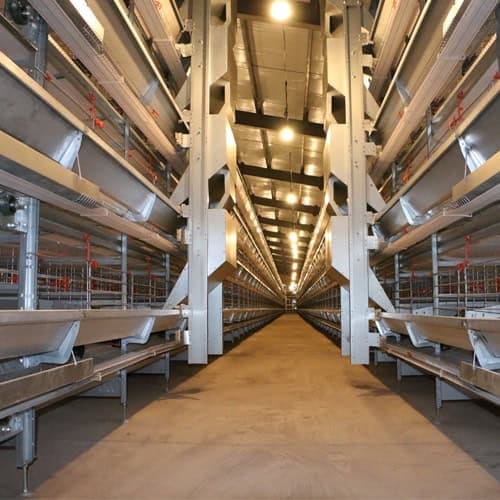
Where layer flocks actually slip
Feed that bridges in the silo or runs out overnight shows up as a drop in intake before anyone sees an empty trough. Nipples set for the pullet week and never lifted leave birds stretching or wasting water into the manure. A hot afternoon with pads dry and fans short cycles the house. Eggs that roll too far, or pile at the head of the belt, crack before they reach the collection table. Manure left under a stacked row turns the aisle into the job.
| What you see | What to check on the line |
|---|---|
| Intake falls, troughs uneven | Silo outlet, auger or chain, trough at every tier |
| Wet manure, birds missing the nipple | Nipple height and line pressure |
| Panting on hot days | Fans, pad wetness, inlet opening |
| Cracked eggs at the table | Belt speed, transfer, collection end |
| Ammonia in the aisle | Manure belt or scrape, and how often it runs |
Practices that belong on the equipment list
Keep mash moving from the silo to every tier, not only the aisle trough. Raise nipples with the flock instead of leaving the week-one setting. Run fans and pads as a pair: dry pads and short fans do not cool a full house. Give eggs a belt and a collection end so staff are not carrying trays off every cage. Give manure a belt or a scrape on a clock if the row is stacked. Light timers and a walk to look at shells still stay with the crew. The line does not replace that walk.


| Job | On a working layer list |
|---|---|
| Feed | Silo, transfer, trough or hopper on the row |
| Water | Nipple line that can be raised |
| Air | Fans and pads sized to the house and the climate |
| Eggs | Belt to a collection end, not a tray on every door |
| Manure | Belt or scrape, run on a clock |

What to send before the list is cut
Bird numbers, house length and width, eave height, and the climate or country. Say whether eggs and manure already leave on belts or still leave by hand. Those four decide the row, the silo and the fan wall. We do not print a lay-rate here.
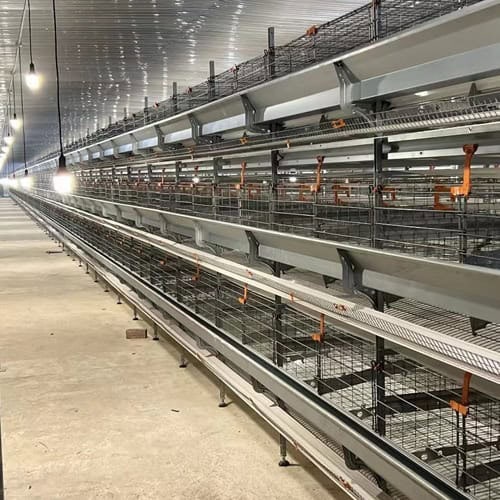
FAQ
What are the common challenges in layer farming?
Feed gaps, nipples at the wrong height, a hot house, cracked eggs on the belt, and manure left under the row.
What practices actually hold a layer flock?
Mash to every tier, water that rises with the birds, fans and wet pads together, an egg collection end, and a manure path on a clock.
What should I send for a layer-house list?
Bird numbers, house sizes, climate, and whether eggs and manure leave by belt or by hand.
Send the flock and the house, not a lay-rate target.
Birds, span, eave, climate. Weifang Splendid will mark feed, water, air, eggs and manure.