A-Type or H-Type: What Changes the Quote
- An A-type layer cage steps out. Manure often drops to a pit or one scraper under the row.
- An H-type layer cage stacks straight. Each tier takes its own manure belt and its own egg belt.
- The choice is house height, manure method, and whether eggs leave on a belt. Not a catalogue preference.
Weifang Splendid quotes the two cages as different jobs. A-type spreads the tiers so manure can fall past the lower birds. H-type stacks them, so every tier needs a surface under it. The same bird count in a low existing house and in a new tall house does not land on the same cage.
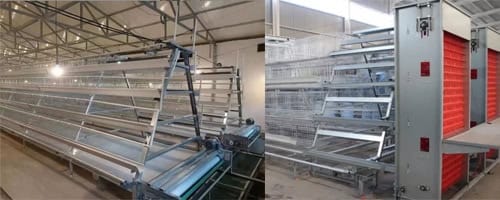
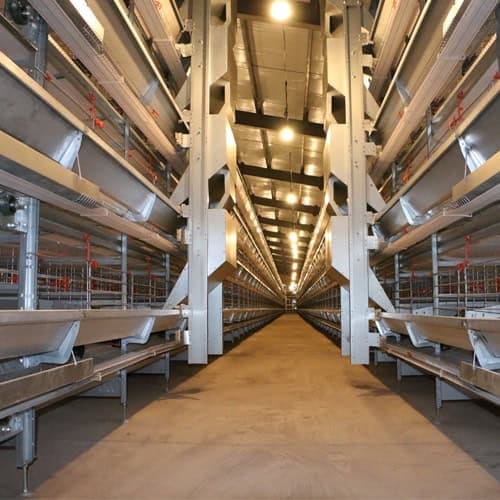
Manure is the first split
On an A-type row the tiers are offset. Droppings fall past the cage below into a pit or a channel. A scraper can pull that channel. Some builds put a wide belt under the whole row. The point is one path for the manure, not a belt per tier.
On an H-type row the tiers sit one above the other. Manure from the upper tier would land on the birds below if nothing caught it. So each tier has its own belt. A four-tier row is four belts, four drives or a shared shaft, and a cross conveyor at the end. That is the bulk of the difference on the sheet. A scraper does not replace those belts. The frame decides the manure line.
Eggs and the house
An H-type row takes an egg belt on the front of each tier, gathered at one end. An A-type row can take a belt on some builds. Many are still collected by hand from the front, because the step leaves a walkway. If the quote says automatic egg collection, the cage and the belt are one item. A belt added later has to match the cage front.
Height is the other gate. An H-type stack of four or more tiers needs clear height above the top cage for the walkway and the feed line. A low existing house often cannot take that stack. A-type, with fewer tiers and a step, fits a lower ridge. A new house can be built to the cage. An old house cannot. Weifang Splendid reads the clear height before the tier count.
| A-type | H-type | |
|---|---|---|
| Frame | Stepped | Stacked |
| Manure | Pit, scraper, or one belt under the row | Belt under each tier |
| Eggs | Often by hand, belt on some builds | Belt per tier, to one end |
| House | Lower ridge can take it | Needs clear height above the top tier |
What the quote actually moves
Birds and house width set the row count. The type sets the rest. H-type adds a manure belt and an egg belt for every tier, plus the drives and the cross conveyors. A-type adds a scraper or a pit, and often keeps egg collection on the walkway. Feed and nipples are on both. The climate line is heavier on H-type, because the stack blocks the lower tiers and the house usually runs tunnel. None of that is a percentage on a brochure. It is a list of lines that appear or do not.
What to send
Birds, new house or existing, clear height, and whether manure and eggs should leave on a belt. The cage follows that.
FAQ
What is the real difference?
A-type steps. Manure falls past. H-type stacks. Each tier needs a belt under it.
Can an old low house take H-type?
Only if the clear height clears the top tier, the walkway, and the feed line. Many do not.
Does A-type have an egg belt?
On some builds. Many are collected by hand from the front.
What should I send?
Birds, new or existing house, clear height, and whether manure and eggs go on a belt.