Configuring Automated Breeder Floor Systems to Reduce Floor Eggs (2026)
In commercial breeder operations, properly configured automated floor systems with smart nest boxes are essential to achieve floor egg ratios below 1% and protect hatching egg quality.
Quick Answer
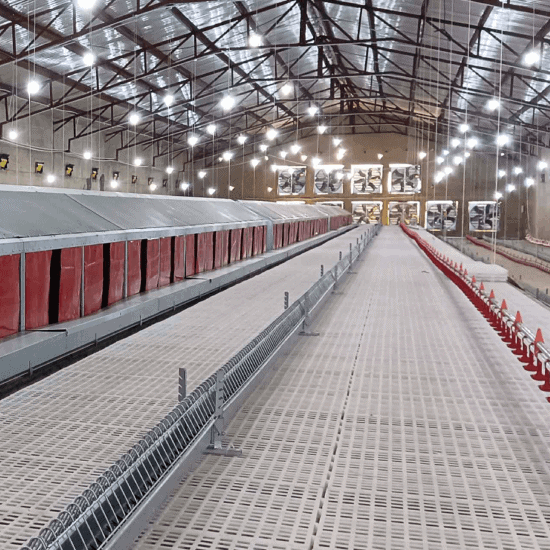
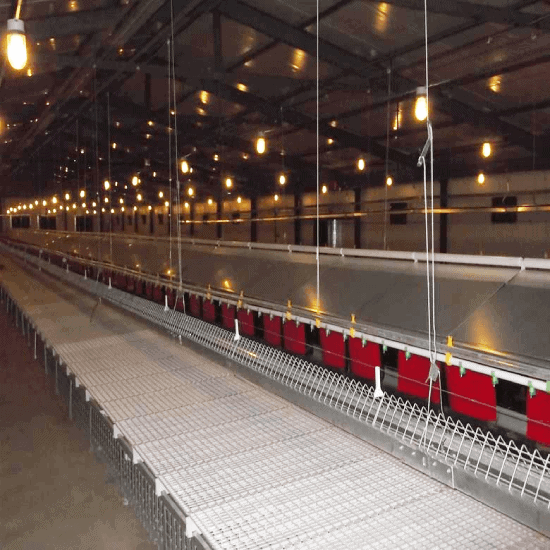
Maintain a strict 5-degree plastic slat slope gradient connected to center-row automated roll-away nest boxes equipped with synchronized bird expulsion mechanisms. This drives the floor egg ratio below 1%, protecting hatching egg sanitation and hatchability.
The Hatchery Bio-Shield Failure: Why Floor Eggs Destroy Parent Stock ROI
Eggs laid on contaminated litter absorb devastating E. coli and Salmonella pathogens through porous shells, rendering premium hatching eggs useless and causing massive economic losses.
Step 1: Calibrating Slat Slopes and Litter Area Ratios for Perfect Nest Transit
An overly steep slat slope deters heavy broiler breeders from ascending, while a perfect 5-degree incline guides hens directly into the automated nest entrance pads.
Structural Layout & Slat Specifications for Automated Breeder Houses (2026 Data)
| Breeder Flock Density per sqm | Ideal Slat-to-Litter Area Ratio | Recommended Plastic Slat Slope Degrees | Nest Box Entrance Clearance mm | Female Chain Feed Grill Width mm |
|---|---|---|---|---|
| 6–7 birds | 60:40 | 5 | 280–320 | 42–44 |
| 7–8 birds | 65:35 | 5 | 300–330 | 42–44 |
| 8+ birds | 70:30 | 5 | 320–350 | 44 |
Step 2: Fine-Tuning Male/Female Segregated Feeding Lines to Control Body Mass Uniformity
Calibrate female chain loop grills to exactly 42-44mm to block heavy male combs, while elevating male pan auger pipes out of female reach to ensure precise fertilization ratios.
Step 3: Programming Automated Bird Expulsion Systems and Night-Close Relays
Configure the central control panel to gently push hens out of the nests via automated moving back-walls or tilting floors at dusk, preventing nocturnal nesting habits, broodiness, and manure fouling on the collection pads.
Frequently Asked Questions
1. What is the ideal floor egg ratio target for commercial breeder farms?
Below 1% is the industry standard for premium hatching egg production.
2. What slat slope is recommended for breeder houses?
A strict 5-degree plastic slat slope gradient provides the best balance of comfort and nest transit.
3. How do automated bird expulsion systems work?
They gently push hens out of the nests at dusk using moving back-walls or tilting floors to prevent nocturnal nesting.
Conclusion
Proper configuration of automated breeder floor systems with smart nest boxes is fundamental to achieving low floor egg ratios, high hatching rates, and strong commercial ROI.
Need a Free Turnkey Commercial Breeder Farm Layout Design, Automated Nest Box System Blueprint & Wholesale Factory Quote?
Our engineering team provides complete breeder floor system design for commercial poultry farms worldwide.
Related Articles
- Commercial Steel Structure Poultry House Design: Optimal Dimensions for Multi-Tier Cages (2026)
- Turnkey Broiler Equipment Selection for Nigeria Farms: Overcoming Power & Heat Constraints
By Caroline, Senior Poultry Equipment Specialist at Weifang Splendid Machinery Equipment Co., Ltd. (18 years global experience in breeder floor systems).
• Commercial Breeder Floor System Engineering Standards 2025-2026
• Field performance data from automated breeder installations
• Poultry Breeder Management and Floor Egg Reduction Reports