Configuring Feed Silos & Lines for High-Density Houses (2026)
In high-density automated cage systems, properly configured bulk feed silos and main feeding lines are critical to ensure consistent nutrition delivery, minimize feed segregation, and prevent costly downtime from bridging or motor failures.
Quick Answer
For a 20,000–50,000 bird high-density poultry house, use one or two 8–15 ton hot-dip galvanized (275g/m² zinc) silos equipped with load cell weighing modules, connected via 90mm PVC transition pipes to a high-tensile spring auger main line delivering 2,000–3,500 kg/h. This setup maintains fresh feed flow and supports uniform FCR across all cages.

The Logistics Bottleneck: Why Feed Bridging and Moisture Ingress Ruin Flock FCR
Low-grade silos trap condensation during temperature swings, causing feed to clump at the cone outlet. This leads to auger dry-running, motor overload, and sudden nutritional drop-outs across entire cage rows, directly worsening feed conversion ratio and flock uniformity.
Step 1: Sizing Bulk Feed Silos Based on Daily Consumption Metrics
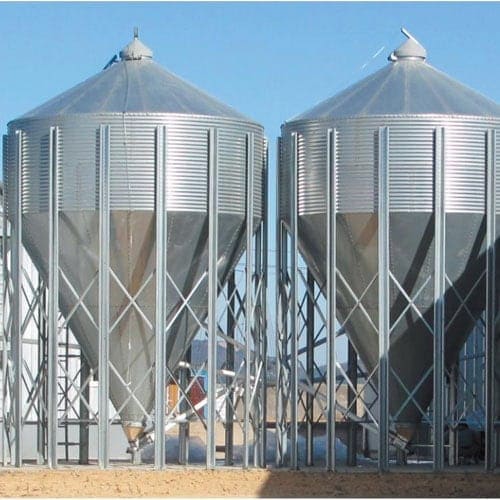
Calculate silo capacity using a 3-day emergency buffer. For a 30,000-bird broiler house consuming approximately 4.5–5.5 tons of feed daily at peak growth, install one or two 10–15 ton silos. Choose 275g/m² hot-dip galvanized corrugated steel to resist corrosion from high humidity and ammonia exposure.
Engineering Specifications for Commercial Poultry Feed Silos & Main Lines (2026 Data)
| Flock Capacity Range | Recommended Silo Tonnage | Main Line Pipe Diameter (mm) | Auger Delivery Capacity (kg/h) | Drive Motor Rating (kW) |
|---|---|---|---|---|
| 10,000–20,000 birds | 6–10 ton | 75–90 | 1,500–2,200 | 0.75–1.1 |
| 20,000–40,000 birds | 10–15 ton | 90–110 | 2,200–3,500 | 1.1–1.5 |
| 40,000–60,000+ birds | 15–25 ton (×2) | 110–140 | 3,500–5,000 | 1.5–2.2 |
Step 2: Calibrating the Main Pipe Auger Transit Line and Drive Synchronization
Use high-tensile spring augers inside 90mm PVC pipes for smooth, low-segregation transport. Select direct-drive motors matched to house length to maintain consistent 2,200–3,500 kg/h delivery. Install capacitive feed sensors at distribution hoppers to automatically stop the auger when target levels are reached.
Step 3: Installing Capacitive Sensors and Mechanical Limit Switches for Zero-Waste Level Control
High-sensitivity capacitive sensors in cross-house hoppers trigger the main auger on demand. Combine with mechanical limit switches to prevent overflow and ensure precise, waste-free feed distribution to all internal cage feeding troughs.
Frequently Asked Questions
1. How many tons of feed silo capacity do I need for a 30,000 bird farm?
Recommend 10–15 ton silos with a 3-day buffer to ensure continuous supply during peak consumption.
2. What is the recommended auger delivery capacity?
2,200–3,500 kg/h for high-density houses to match daily feed demand without segregation.
3. Why use 90mm PVC pipes for the main feeding line?
It provides optimal flow and reduces friction for long-distance transport while preventing feed damage.
Conclusion
Properly configured feed silos and main feeding lines are the backbone of efficient high-density poultry production. Matching silo tonnage, auger capacity, and sensor control ensures consistent nutrition, reduced waste, and faster ROI for commercial operations.
Need a Free Turnkey Poultry Feed Storage Blueprint, Main Line Sizing Layout & Wholesale Factory Quote?
Our engineering team specializes in designing complete bulk feed storage and automated main line systems for high-density cage houses worldwide.
Related Articles
- How an Automatic Chicken Feeding System Reduces Labor and Feed Waste in Modern Poultry Farms (2026)
- Poultry Feeding System Price Guide: Cost, Types, and Buying Tips for Commercial Farms (2026)
By Caroline, Senior Poultry Equipment Specialist at Weifang Splendid Machinery Equipment Co., Ltd. (18 years global experience in automated poultry feeding systems).
• Commercial Poultry Feed Storage and Logistics Engineering Reports 2025-2026
• Bulk Silo and Auger Performance Field Data
• Turnkey Poultry Farm Project Specifications from Asia and Africa