Poultry House Environmental Control System: Complete Automation Guide for Modern Chicken Farms (2026)
Commercial poultry farms in hot and variable climates depend on a reliable poultry house environmental control system to maintain stable temperature, humidity, ventilation, and lighting conditions. In 2026, modern poultry house climate control system technology allows large-scale operations to achieve precise automation, reduce labor, lower mortality, and maximize productivity. A well-designed system integrates sensors, controllers, fans, cooling pads, and monitoring to create the ideal environment for both layers and broilers, directly impacting feed conversion, egg production, and overall farm profitability.
According to recent poultry industry reports, environmental control accounts for up to 60% of productivity variation in intensive poultry production. Modern climate control systems allow farms to maintain optimal conditions even when outside temperatures fluctuate dramatically.
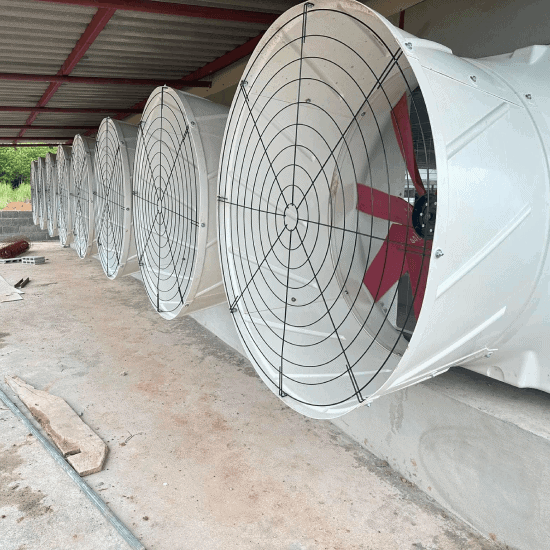
What Is a Poultry House Environmental Control System
A poultry house environmental control system is an integrated automation solution that continuously monitors and adjusts key environmental factors inside the poultry house. It combines hardware (sensors, fans, cooling pads, lighting) with intelligent controllers to maintain optimal conditions 24 hours a day. Unlike manual management, this system reacts instantly to changes in temperature, humidity, ammonia levels, and power status, ensuring consistent performance even during extreme weather.
Key Environmental Parameters in Poultry Houses
- Temperature: Optimal range 18–24°C for layers, 21–26°C for broilers
- Humidity: 50–70% relative humidity to prevent respiratory issues and wet litter
- Air speed: 2.5–3.5 m/s in tunnel mode for effective wind-chill cooling
- Ammonia level: Keep below 20 ppm to maintain bird health and performance
- Lighting: Programmable intensity and duration to optimize growth and egg production
Key Components of a Poultry House Climate Control System
Environmental Controller
The central brain of the system. Modern poultry house controller units can manage multiple houses simultaneously, with touchscreen interfaces and remote access via mobile app.
Temperature and Humidity Sensors
High-accuracy sensors placed at bird level provide real-time data. Most systems use multiple sensors to create an average reading and avoid localized hot or cold spots.
Ventilation Fan Automation
Automatic poultry house ventilation control adjusts fan speed and runtime based on temperature, bird age, and target air velocity.
Cooling Pad Automation
The system automatically activates water circulation over cooling pads when temperature rises above the set point.
Lighting Control
Programmable lighting schedules optimize bird growth and egg production while saving energy.
Alarm and Monitoring Systems
Real-time alerts via SMS, phone call, or app notify managers of power failure, high temperature, or equipment malfunction, minimizing risk of loss.

How Automatic Environmental Control Improves Poultry Farm Performance
Automated systems deliver precise control that manual management cannot match. Consistent temperature and humidity reduce heat stress, improve feed conversion ratios by 3–8%, and increase egg production by 5–12% in layer farms. Better air quality lowers ammonia levels and respiratory disease incidence. Farms using full poultry house environmental control system typically report 1–3% lower mortality and significantly reduced labor costs.
Recommended Environmental Control Setup for Different Farm Sizes
| Farm Size | Controller Type | Number of Sensors | Fan & Cooling Automation | Recommended Features |
|---|---|---|---|---|
| 10,000 birds | Basic digital controller | 4–6 | Partial automation | Temperature + fan control |
| 30,000 birds | Advanced touchscreen controller | 8–12 | Full automation | Cooling pad + ventilation + alarm |
| 60,000+ birds | Centralized multi-house controller | 12–20 | Full automation + remote monitoring | Complete climate + lighting + data logging |
Environmental Control System vs Manual Poultry House Management
| Aspect | Automated System | Manual Management |
|---|---|---|
| Temperature Stability | Excellent | Variable |
| Labor Requirement | Low | High |
| Response Time to Changes | Seconds | Minutes to hours |
| Production Consistency | High | Lower |
| Energy Efficiency | Optimized | Often wasteful |
Real Farm Example: Automated Poultry House Environmental Control
A 55,000-layer farm in Saudi Arabia upgraded to a full poultry house environmental control system in late 2025. The system included 16 temperature/humidity sensors, centralized controller, automatic cooling pad activation, and variable-speed tunnel fans. During peak summer (outside temperature 42°C), internal house temperature stayed between 26–28°C. Egg production rose by 14%, feed conversion improved by 0.09 points, and mortality dropped from 4.5% to 1.2%. The entire investment was recovered in 11 months through increased output and reduced losses.
Common Mistakes When Installing Environmental Control Systems
- Installing too few sensors, leading to inaccurate average readings
- Undersized fans or cooling capacity for the house size
- Poor sensor placement (too high or near walls)
- Lack of backup power and alarm systems
- Failure to train staff on controller operation and maintenance
FAQ
Q: What is the most important component of a poultry house environmental control system?
A: The environmental controller is the brain, but accurate sensors and properly sized fans/cooling pads are equally critical for reliable performance.
Q: Can a poultry house climate control system be added to an existing house?
A: Yes. Most systems are modular and can be retrofitted to existing poultry houses with proper engineering assessment.
Q: How much can automatic poultry house ventilation control reduce labor costs?
A: Farms typically see 40–70% reduction in daily environmental management labor after full automation.
Q: Is a poultry farm environment monitoring system necessary for small farms?
A: Even smaller farms benefit greatly from basic monitoring and alarm functions to prevent costly losses during power outages or equipment failure.
Q: What is the typical payback period for a full poultry house environmental control system?
A: Most commercial farms recover the investment within 12–18 months through improved performance and reduced losses.
Conclusion
A modern poultry house environmental control system is no longer a luxury — it is a necessity for competitive commercial chicken farms in 2026. By providing precise, automated management of ventilation, cooling, lighting, and monitoring, these systems deliver measurable improvements in bird health, productivity, and profitability while significantly reducing labor and risk.
Need a Complete Poultry House Environmental Control Solution?
Our poultry engineering team provides full design, equipment supply, and installation support for modern poultry house climate control systems worldwide.
Request Your Free Poultry House Environmental Control Design →
Related Articles
- Cooling Pad vs Fogging System for Poultry Houses
- Evaporative Cooling Pad System for Poultry Houses
- Tunnel Ventilation System for Poultry Houses
- What Is the Best Ventilation System for Layer Chicken Houses?
By Caroline, Poultry Equipment Specialist, Weifang Splendid Machinery Equipment Co., Ltd.
• USDA Livestock & Poultry Outlook, Feb 2026
• Commercial Poultry Climate Control Reports 2025-2026
• Field data from automated poultry house installations worldwide