Evaporative Cooling Pad System for Poultry Houses
Commercial poultry farms in hot climates rely heavily on a well-designed cooling pad system poultry house to maintain optimal temperatures during extreme summer conditions. A modern poultry cooling pad system combined with tunnel ventilation can reduce house temperature by 8–12°C, even when outside temperatures exceed 38°C. This technology helps farmers maintain feed intake, reduce heat stress, improve egg production, and lower mortality rates.

What Is a Cooling Pad System in Poultry Farming
A cooling pad system in poultry farming is an evaporative cooling technology that uses large cellulose or paper pads installed on one end of the poultry house. When water is circulated over these pads and tunnel ventilation fans pull air through them, the evaporation process absorbs heat from the incoming air, significantly lowering the temperature before it reaches the birds.
How Evaporative Cooling Pads Work in Poultry Houses
The working principle is straightforward but highly effective. Tunnel ventilation fans at the opposite end of the house create negative pressure, drawing outside air through the wet cooling pads. As the air passes through the saturated pads, water evaporates and removes heat from the air. The cooled air then travels the full length of the house at high velocity, creating a wind-chill effect that helps birds dissipate body heat.
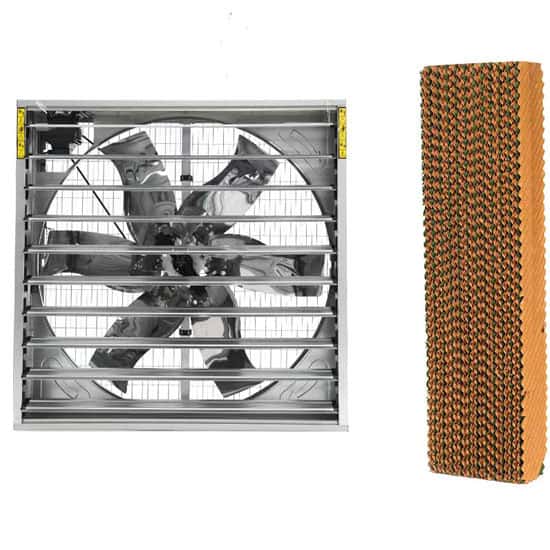
Key Components of a Poultry Cooling Pad System
Cooling Pads
The core of the system. High-quality 100–150 mm thick cellulose pads offer the best balance of cooling efficiency and durability. In practice, 10–15 cm thick pads are most commonly used in commercial poultry farms.
Water Distribution System
Consists of PVC pipes with evenly spaced holes or spray nozzles that ensure uniform water coverage across the entire pad surface.
Circulation Pump
A reliable submersible or centrifugal pump recirculates water from the tank to the distribution system.
Water Tank
A properly sized concrete or plastic tank stores recirculating water and allows for easy cleaning and chemical treatment.
Tunnel Ventilation Fans
Large exhaust fans work in tandem with the cooling pads to create the necessary airflow.
Recommended Cooling Pad Design for Different Farm Sizes
The required cooling pad area depends largely on poultry house length, bird population, and ventilation capacity. The following table shows typical design parameters used in commercial poultry farms.
| Farm Size | Cooling Pad Length | Fan Requirement | Temperature Reduction |
|---|---|---|---|
| 10,000–20,000 birds | 8–12 m | 8–12 fans | 6–10°C |
| 30,000–50,000 birds | 12–20 m | 14–20 fans | 8–12°C |
| 60,000+ birds | 20–30 m | 24–36 fans | 10–12°C |
Cooling Pad System vs Fogging System
| Aspect | Cooling Pad System | Fogging System |
|---|---|---|
| Cooling Efficiency | High | Medium |
| Water Consumption | Medium | High |
| Maintenance | Moderate | High |
| Best For | Large commercial farms | Small farms |
Real Farm Example
A 45,000-layer farm in Kenya installed a complete poultry cooling pad system in early 2025. The house was 120 m long with 18 m wide cooling pads and 20 tunnel fans. During the hottest months, when outside temperature reached 39°C, internal house temperature stayed between 26–28°C. Egg production increased by 11%, mortality dropped from 3.8% to 0.9%, and feed conversion improved by 0.08 points. The entire system paid for itself within 13 months.
Common Mistakes When Installing Cooling Pad Systems
- Undersized cooling pad area leading to insufficient cooling
- Poor water distribution causing dry spots on the pads
- Incorrect fan capacity or placement resulting in uneven airflow
- Failure to maintain pads and water quality
- Ignoring local humidity levels when designing the system
FAQ
Q: How much temperature reduction can a cooling pad system poultry house achieve?
A: In typical hot and dry conditions, 8–12°C reduction is common.
Q: What is the difference between cooling pad system and fogging system?
A: Cooling pads provide more uniform and drier cooling, while fogging uses fine mist and consumes more water.
Q: How often should cooling pads be replaced?
A: High-quality pads usually last 3–5 years with proper maintenance and water treatment.
Q: Can a poultry cooling pad system be used with both layers and broilers?
A: Yes, it is equally effective for both when the design matches the house size and bird density.
Q: What thickness cooling pads are best for poultry houses?
A: Most commercial poultry farms use 100–150 mm thick cellulose cooling pads because they provide the best balance of airflow resistance and cooling efficiency.
Conclusion
A properly engineered cooling pad system poultry house is one of the most important investments for commercial farms operating in hot climates. When designed and installed correctly, it delivers consistent temperature control, improved bird performance, and strong return on investment.
Need a Professional Poultry House Cooling System Design?
Our poultry engineering team provides complete ventilation and cooling solutions for commercial poultry farms worldwide.
Get a Free Poultry House Ventilation Design →
Related Articles
- Cooling Pad vs Fogging System for Poultry Houses
- Poultry House Environmental Control System
- Tunnel Ventilation System for Poultry Houses
- What Is the Best Ventilation System for Layer Chicken Houses?
By Caroline, Poultry Equipment Specialist, Weifang Splendid Machinery Equipment Co., Ltd.
• USDA Livestock & Poultry Outlook, Feb 2026
• Commercial Poultry Ventilation Reports 2025-2026
• Field performance data from evaporative cooling pad installations worldwide