Ultimate Guide to Poultry Farm Equipment: Starting Your Farm, Choosing Systems, and Maximizing ROI
Key Takeaways
- Foundational Planning: Evaluating site capacity, startup capital, and matching equipment to target flock types (broilers vs. layers).
- System Selections: Contrasting litter-based floor raising against high-density cage infrastructure, including specific breakdowns of A-type and H-type layer cages.
- Automation & Cost Control: Integrating exterior feed silos, precise weighing systems, and automatic nest boxes to optimize the critical 65%–70% feed cost ratio.
Launching a successful commercial enterprise or upgrading backyard operations requires a deep understanding of infrastructure layout. When stakeholders ask, "What should I consider when starting a poultry farm?" or look into "How do I choose the right poultry equipment for my farm?", the correct decision dictates long-term survival against fluctuating feed markets.
Whether you are managing meat production lines or egg-laying facilities, selecting the right poultry supplies and equipment is paramount. This comprehensive guide covers every operational pathway—from broiler floor setups and layer cage batteries to automated feed silos and weighing networks.
1. Key Factors to Consider When Starting a Commercial Poultry Farm
Direct Answer: Establishing a profitable farm begins with defining your production objective (broilers vs. layers), securing reliable feed and water supply chains, designing proper biosecurity layouts, and choosing durable mechanized systems.
Before purchasing hardware, a sound business blueprint must evaluate these foundational elements:
- Flock Specialization: Choosing between broiler rearing for meat and layer production for table eggs.
- Environmental Control: Engineering proper tunnel ventilation and insulation to maintain uniform internal temperatures.
- Equipment Durability: Investing in hot-dip galvanized steel frames and corrosion-resistant feeding lines.
- Capital Allocation: Balancing initial capital expenditures (CAPEX) with ongoing operational expenditures (OPEX).
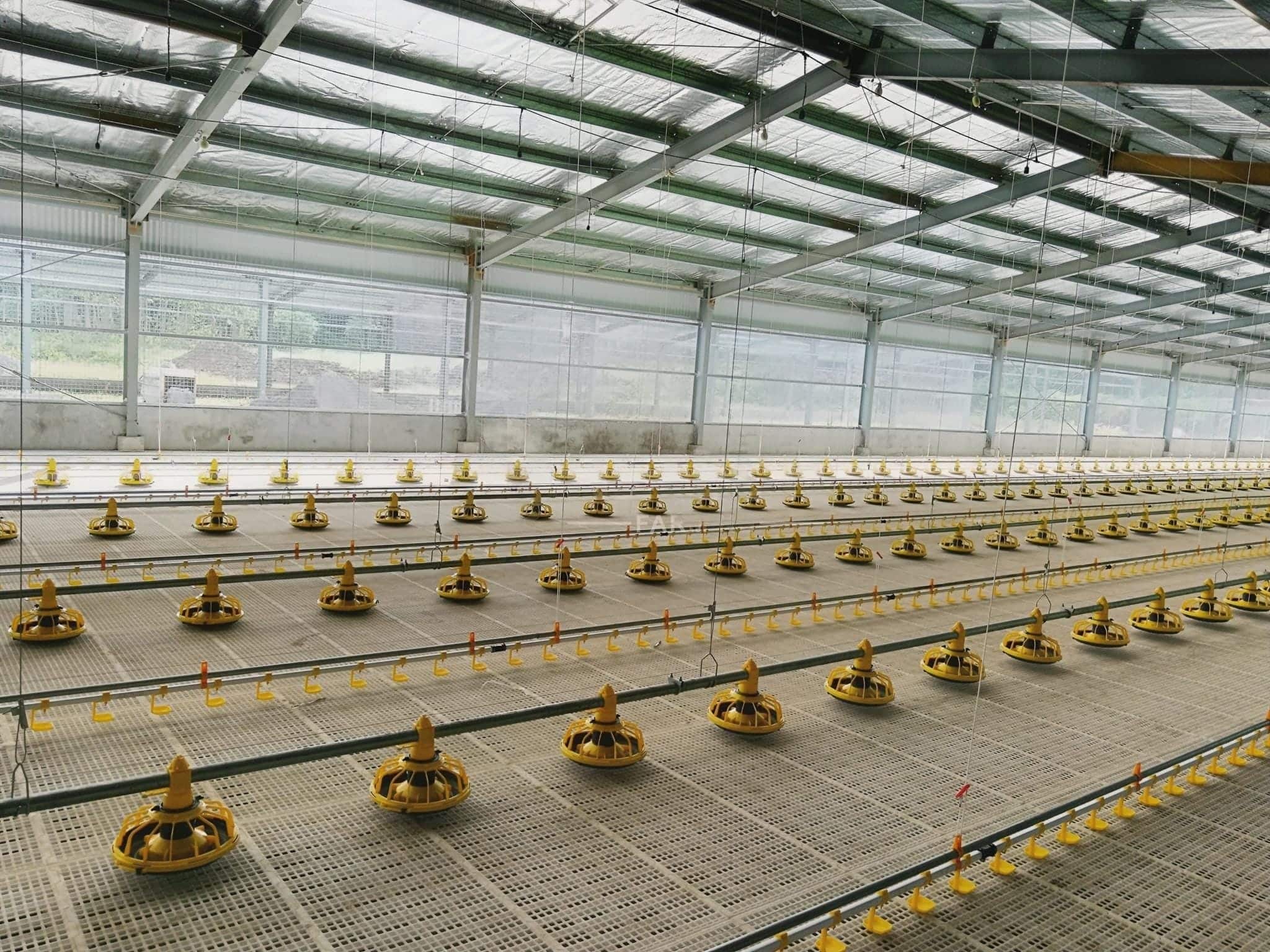
2. Broiler Production Systems: Floor Raising vs. Broiler Cage Systems
Direct Answer: Broiler production primarily relies on litter-based floor raising equipped with pan feeders and nipple lines, though modern high-density broiler cage systems are increasingly adopted to maximize space and lower feed conversion ratios (FCR).
Examining the mechanics of broiler housing options:
- Broiler Floor Raising: Utilizes wood shavings or litter, automated pan feeding systems, and nipple drinking lines. It allows natural movement and lowers initial investment barriers.
- Broiler Cage Systems: Multi-tier vertical cages designed specifically for meat birds, preventing contact with manure, reducing disease risks, and optimizing floor space utilization.
3. Layer Production Systems: Floor Raising (with Nest Boxes) vs. Layer Cages
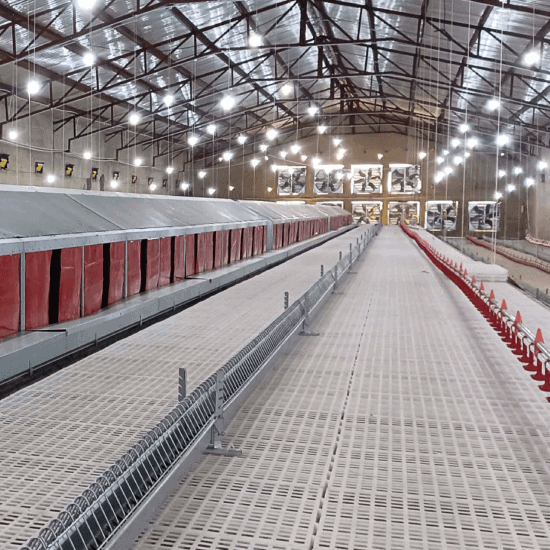
Direct Answer: Layer farming requires specialized egg-collection mechanics. Floor systems require clean litter, nipple lines, and automatic or manual nest boxes to prevent floor eggs, whereas cage systems provide automated egg-rolling channels.
Evaluating layer setup requirements:
- Layer Floor Raising: Requires dedicated poultry automatic nest boxes or manual nesting units to ensure clean, unbroken table eggs in alternative management setups.
- Layer Cage Systems: High-efficiency battery cages that separate layers from waste, ensuring pristine egg hygiene and streamlined collection.
4. Deep Dive into Layer Cage Systems: A-Type vs. H-Type Equipment
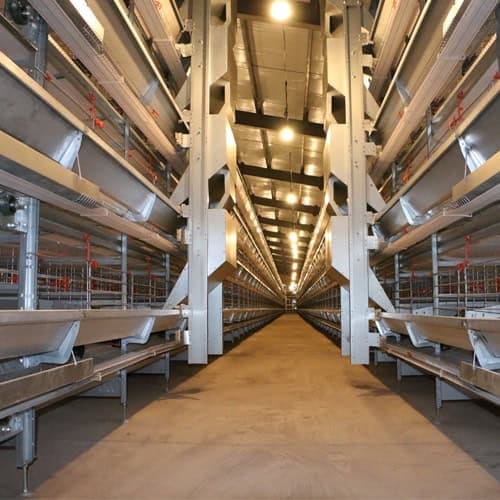
Direct Answer: The choice between an A-type layer cage system and an H-type layer cage system depends on farm scale and automation budget: A-frames offer stable, cost-effective semi-automation, while H-type battery cages deliver maximum multi-tier density and total automated control.
Detailed structural comparison of layer cages:
- A-Type Layer Cage Systems: Traditional triangular frames ideal for small-to-medium operations. They feature excellent structural stability, simpler maintenance, and lower upfront equipment costs.
- H-Type Multi-Tier Battery Cages: Advanced vertical configurations that maximize building height capacity. Equipped with integrated manure belts, automated egg belts, and centralized feeding lines, making them the gold standard for large commercial egg producers.
5. Essential Automation Infrastructure: Feed Silos, Augers, and Weighing Systems
Direct Answer: Automated feeding architecture—including exterior feed silos, spiral auger conveyors, and precision feed weighing systems—is mandatory to curb feed waste and control the 65%–70% feed cost ratio.
Key automated supplies needed for modern facilities include:
- Feed Silos: Galvanized exterior towers protecting bulk feed against weather, moisture, and pests.
- Feed Weighing Systems: Precision scales monitoring daily consumption to adjust nutritional delivery accurately across growth phases.
- Manure Removal Equipment: Scraper systems or conveyor belts that instantly clear waste, protecting flock respiratory health from ammonia buildup.
Expert Tip: Ventilation and Cage Tier Alignment
When designing multi-tier H-type house configurations, ensure your tunnel ventilation speed aligns precisely with tier density. Inadequate negative pressure across dense vertical tiers creates micro-climates that can harm laying rates and uniform flock growth.
Poultry Equipment Comparison Matrix
| System Type | Target Application | Core Equipment Required | Operational Advantage |
|---|---|---|---|
| Broiler Floor System | Meat Production | Litter, Pan Feeders, Nipple Lines | Low initial investment and natural bird movement. |
| Layer Floor System | Alternative Egg Production | Automatic Nest Boxes, Perches, Lines | Meets free-range and alternative market standards. |
| A-Type Layer Cage | Small/Medium Layers | A-Frames, Troughs, Scrapers | High stability, cost-effective maintenance. |
| H-Type Layer Cage | Commercial High-Density Layers | Multi-tier Cages, Silos, Manure Belts | Maximum space efficiency and automatic egg collection. |
Frequently Asked Questions
What should I consider when starting a poultry farm?
You must evaluate your target flock type (broilers or layers), initial capital investment, structural ventilation design, regional feed supply chains, and strict biosecurity protocols.
How do I choose the right poultry equipment for my farm?
Selection depends entirely on your rearing mode. Floor raising requires litter and nest boxes, while intensive setups benefit from automated A-type or H-type cages and precision feeding silos.
What is the difference between A-type and H-type layer cages?
A-type cages feature a traditional triangular frame suited for medium budgets and stable maintenance, whereas H-type cages offer high-density vertical multi-tier stacking with fully automated egg collection and manure removal.
What are the best poultry supplies for raising chickens at home or commercially?
Essential supplies include automated feeding silos, precise weighing scales, nipple drinking systems, and reliable nesting or cage frameworks designed to reduce labor and feed waste.
Related Poultry Guides & Resources
Ready to Design Your Commercial Poultry Farm?
Contact our expert engineering team today for custom house layouts, equipment sizing, and comprehensive financial feasibility studies tailored to your project.
Get a Free Consultation