Industrial Chicken Farming & Smart Solutions: The Ultimate Technology Guide
Latest Trends in Poultry Farming Technology & Smart Farming Solutions
The transition from traditional backyard or open-sided sheds to industrial chicken farming represents a massive leap in engineering, biosecurity, and automation. Today’s commercial chicken farming relies heavily on smart farming solutions that integrate Internet of Things (IoT) sensors, automated feeding lines, and climate-regulated steel structures. When evaluating commercial chicken farming equipment, investors look for high stocking density, minimized labor dependency, and precise environmental control to achieve optimal Return on Investment (ROI).

Modern, insulated steel structure commercial poultry houses designed for large-scale production.
Intensive Farming Infrastructure: Equipment Setup for Commercial Egg Production
Achieving high yields in commercial egg production or large-scale broiler operations requires robust mechanical infrastructure. The backbone of this setup is the multi-tier vertical cage system, which optimizes every cubic meter of the poultry house.
| Sub-System | Engineering Specifications & Operational Principle |
|---|---|
| H-Type Vertical Cages | Hot-dip galvanized steel mesh cages arranged in 4 to 8 tiers, providing superior rust resistance and maximum bird capacity per square meter. |
| Automated Feeding Systems | V-trough auger or chain feeding trolleys driven by high-torque gear motors, ensuring precise, uniform feed distribution without segregation. |
| Nipple Drinking Lines | Enclosed stainless steel nipple drinkers equipped with pressure regulators and drip cups, maintaining clean, medicated water access. |
| Manure Removal Belts | High-strength polypropylene (PP) scraping or rolling belts located beneath each tier, drying and clearing waste efficiently to keep ammonia levels low. |
Engineering Insight: H-type automated layer systems completely separate the birds from their manure via automated polypropylene belts, drastically reducing disease transmission vectors and lowering indoor ammonia emissions below critical thresholds.
Optimizing Commercial Broiler and Layer Systems for Maximum ROI
Operational efficiency in intensive farming dictates profitability. Whether managing broiler farming cycles or long-term layer production, equipment synchronization is critical.
- Feed Conversion Ratio (FCR) Optimization: Automated feeding prevents birds from scratching and wasting high-protein feed, directly lowering the cost per kilogram of meat or dozen eggs.
- Biosecurity & Waste Management: Regular operation of automated manure belts prevents fly breeding and damp litter conditions, protecting flock respiratory health.
- Centralized Automation: Programmable Logic Controller (PLC) touch panels allow farm managers to monitor water flow, feed weight, daily lighting schedules, and mortality tracking in real time.
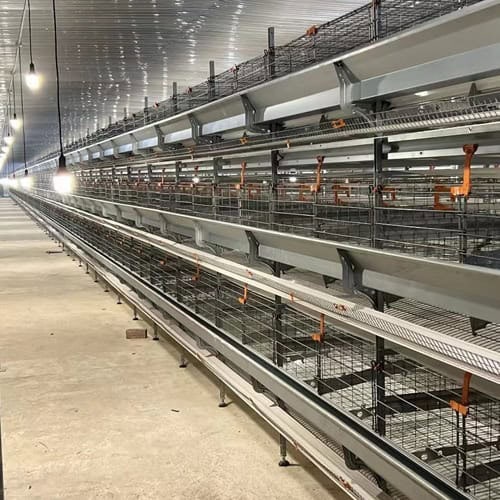
High-efficiency automated H-type layer cages featuring multi-tier feeding, drinking, and manure belts.
Frequently Asked Questions (FAQ)
1. What are the latest technological trends in commercial poultry farming?
Key trends include IoT-based climate and environmental sensors, automated H-type multi-tier cage systems, closed-loop nipple drinking lines, and centralized computer control panels that minimize manual labor.
2. Why are H-type cage systems preferred in modern industrial chicken farming?
H-type vertical stack cages maximize vertical space utilization per square meter, improve biosecurity by separating birds from manure via automatic belts, and drastically reduce feed wastage compared to traditional floor systems.
3. How do automated feeding and manure removal systems operate?
Automated feeding uses a synchronized chain or auger system to distribute balanced feed evenly across all tiers simultaneously. Manure removal relies on polypropylene (PP) belts driven by scraper or roller motors that clear droppings periodically to control ammonia levels.
4. How can smart farming solutions optimize broiler and layer performance?
By maintaining precise temperature, humidity, and static pressure thresholds, smart systems reduce flock stress, lower mortality rates, optimize feed conversion ratios (FCR), and ensure uniform growth or consistent egg production.
Ready to Upgrade Your Poultry Farm with Industrial Automation?
Contact our engineering team for custom H-type cage layouts, automated equipment specifications, and turnkey project quotes.
Request an Industrial Equipment Quote