Comprehensive Guide to Broiler Farming Systems: Operational Models and Modern Equipment
Key Takeaways
- Operational Business Models: Broiler production spans across contract farming, independent commercial operations, and organic/free-range frameworks.
- Infrastructure Systems: Production layouts range from traditional litter flooring to high-density, multi-tier H-type automated cage systems.
- Economic Efficiency: Aligning your business management model with automated equipment ensures optimized Feed Conversion Ratios (FCR) and predictable long-term ROI.
The global poultry sector demands both strategic business planning and precise structural engineering. When building or scaling an enterprise, evaluating the different types of broiler farming systems requires looking at two distinct angles: the operational business model (how the farm is managed and financed) and the facility infrastructure (how the housing and equipment are configured).
By synthesizing commercial management frameworks with cutting-edge machinery, modern producers can navigate supply chain pressures, minimize mortality rates, and optimize overall market delivery.
💡 Strategic Insight:
Successful commercial broiler production is built on alignment. An independent commercial farm utilizing H-type multi-tier cages can achieve up to 150% higher stocking densities per square meter compared to conventional methods.
1. Operational Models in Broiler Production
Before investing in hardware, poultry producers must establish their commercial framework. The business structure dictates cash flow, risk distribution, and market access:
- Contract Farming: Growers partner with major agribusiness corporations that provide chicks, feed, and veterinary guidelines, while farmers supply the housing and labor. This model minimizes market price volatility risk for the grower.
- Independent / Commercial Farming: Farm owners independently manage the entire supply chain—from feed procurement to processing and direct market distribution—capturing higher profit margins with higher capital involvement.
- Organic & Free-Range Broiler Farming: Tailored to niche consumer segments demanding slower growth rates, outdoor access, and specialized organic diets, commanding premium market prices.
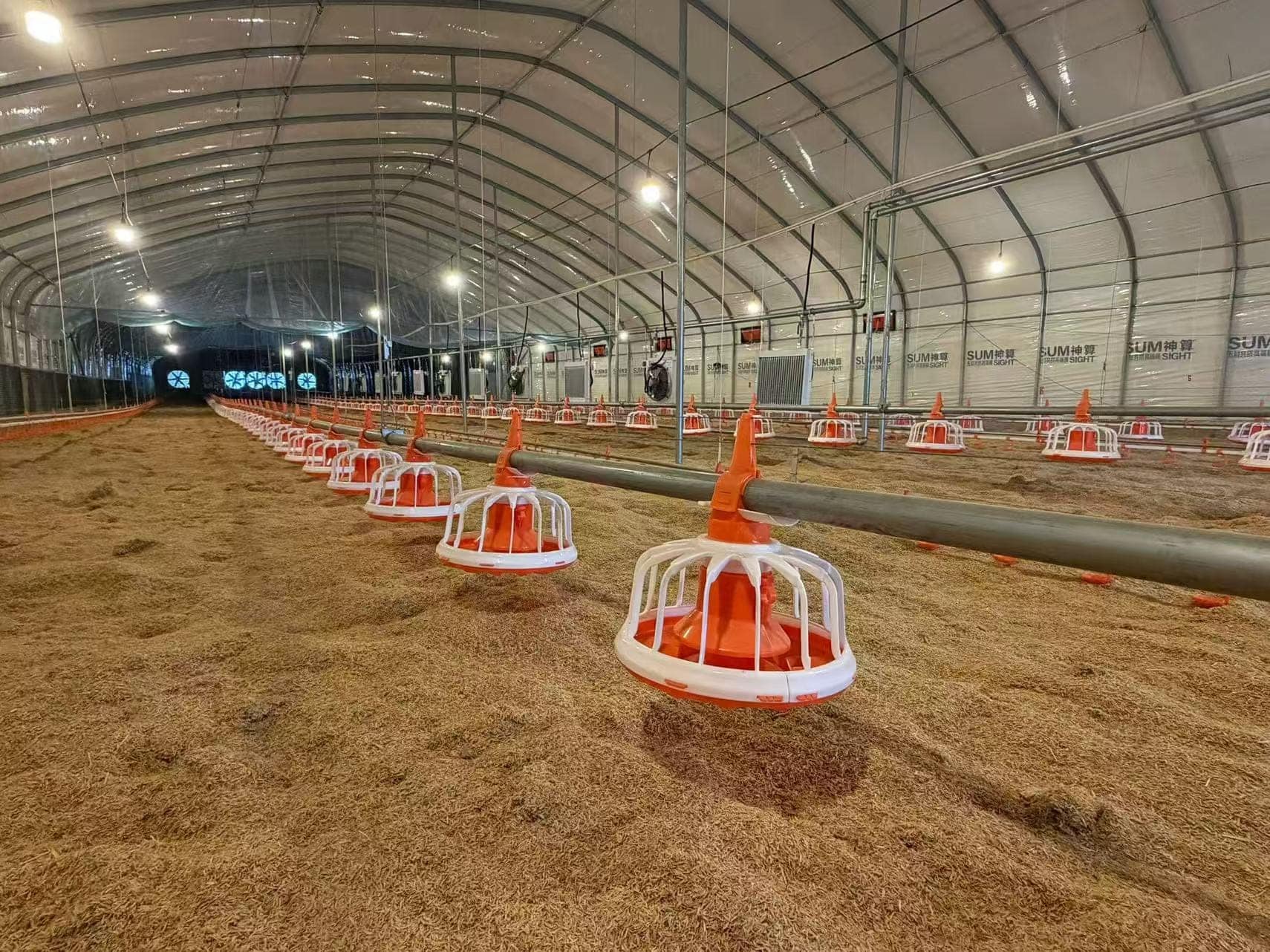
2. Infrastructure Classification: Floor Raising vs. H-Type Caged Systems
On the structural and hardware side, broiler housing utilizes specialized configurations tailored to rapid growth rates and heavy body weights:
| Infrastructure Parameter | Litter Floor Raising | H-Type Caged System |
|---|---|---|
| Space Optimization | Single-level footprint (Lower density) | Multi-tier vertical scaling (High density) |
| Hygiene & Disease Control | Vulnerable to litter moisture and coccidiosis | Superior isolation with automated manure belts |
| Feed Conversion (FCR) | Moderate feed spillage in bedding | Highly optimized feeding troughs and lines |
3. Core Technological Equipment for Modern Broiler Farms
Regardless of whether a farm operates under a contract model or independently, deploying automated equipment is vital to maintaining low Feed Conversion Ratios (FCR) and high survival rates:
Automatic Feeding & Drinking Lines
Ensures uniform nutrient delivery and clean hydration across all tiers without feed contamination or excessive wastage.
Climate Control & Negative Pressure Ventilation
Exhaust fans and cooling pads regulate temperature and humidity, mitigating heat stress during rapid broiler growth phases.
⚠️ Engineering Note on Equipment Selection
Because broilers put on weight rapidly, specialized reinforced flooring and wide-access feeding lines are required to prevent breast blisters and leg weakness.
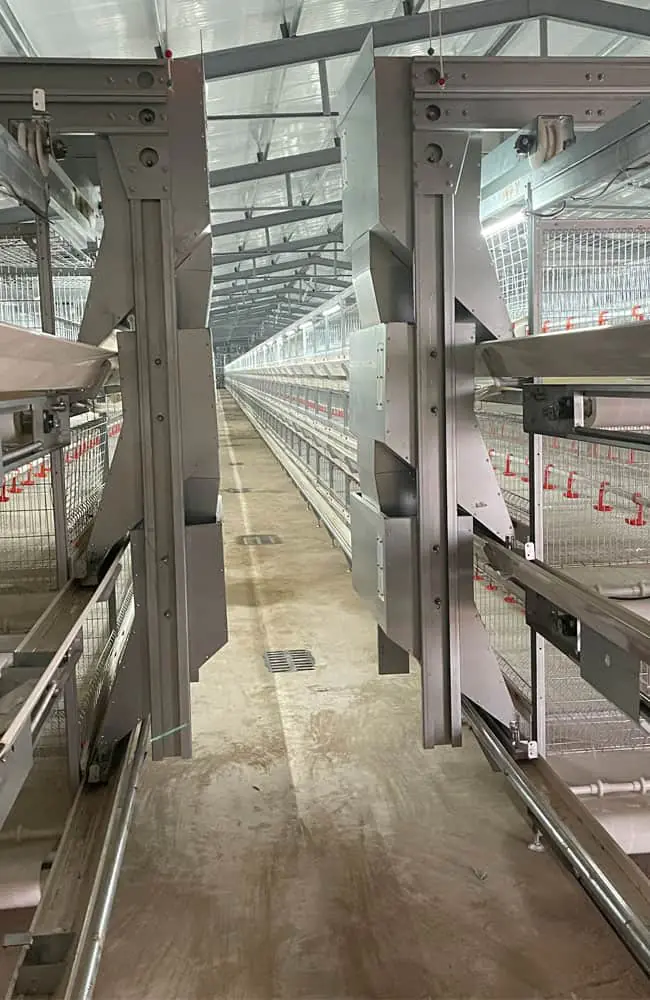
4. Image Spotlight: Advanced Caged Broiler Machinery
Integrating heavy-duty automated components protects your livestock investment and streamlines daily farm management routines.
5. Frequently Asked Questions (FAQ)
Q: What are the main business models of broiler farming?
A: The primary frameworks are contract farming, independent commercial farming, and specialized organic/free-range production.
Q: What facility options are available for housing broilers?
A: Broiler housing primarily consists of traditional litter floor raising and modern vertical H-type multi-tier caged systems.
Q: How do facility systems impact broiler profitability?
A: Choosing the right infrastructure optimizes space utilization, reduces feed wastage, controls ammonia levels, and minimizes labor expenses.
Ready to Plan Your Commercial Broiler Facility?
Consult with our agricultural engineers today to design a customized operational layout and equipment package tailored to your business goals.
Contact Us Now