How to Configure Automated Poultry Nest Boxes for Efficient Egg Collection (2026)
In commercial poultry floor houses, properly configured automated nest boxes and central egg collection belts are essential for minimizing floor eggs, protecting shell quality, and maximizing hatchery yield.
Quick Answer
Allocating 100–120 hens per dynamic group nest section paired with an automated 24V expulsion system and a constant 2.5–4.0 m/min egg belt transit loop forces the floor egg rate below 0.5% while eliminating egg collision breakage for maximum premium hatchery yield.
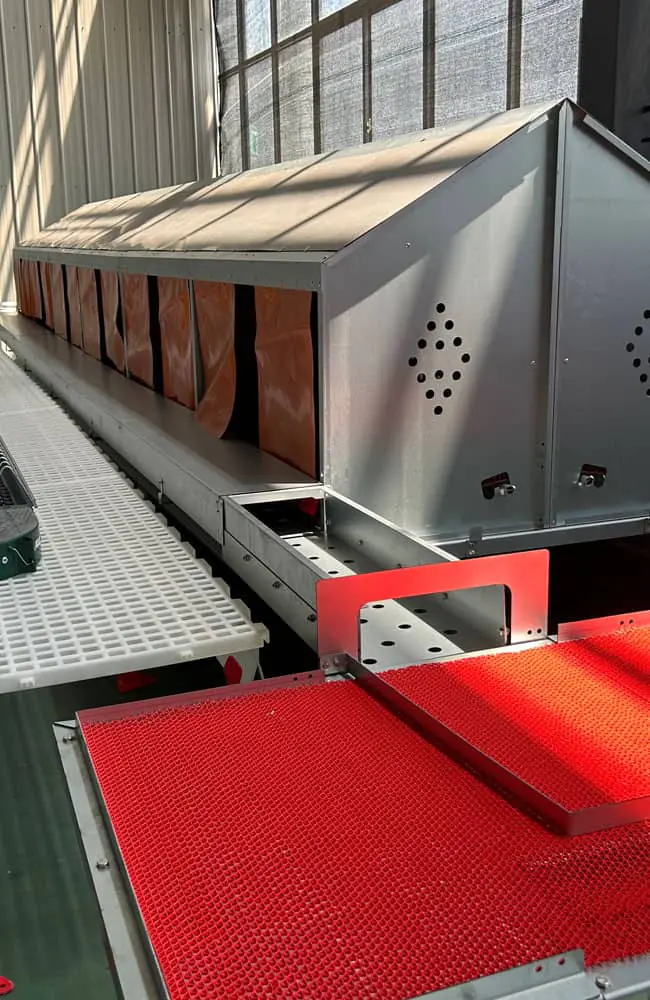
The Floor Egg Bottleneck: Why Poor Nest Management Triggers Hatchery Bio-Security Disasters
Stagnant, dark corners encourage hens to drop eggs on dirty litter, leading to fecal shell contamination and micro-cracking. Manual egg harvesting compromises traceability while multiplying labor overhead.
Step 1: Structural Allocation and Positioning of Group Nests Relative to Slat Slopes
Space double-sided nest modules along the central house line. Align the plastic slat slopes to give hens a natural uphill migration path into the dark nesting cavities.
Engineering Specifications & Calibration for Automated Breeder Group Nests (2026 Data)
| Flock Capacity (Birds) | Recommended Nest Layout Configuration | Target Egg Belt Speed (m/min) | Mechanical Expulsion Interlock Cycle | Targeted Floor Egg Rate Limit (%) |
|---|---|---|---|---|
| 5,000–10,000 | Double-sided central nests | 2.5–3.0 | Late afternoon expulsion | <0.8% |
| 10,000–20,000 | Double-sided + side nests | 3.0–3.5 | Late afternoon + night close | <0.6% |
| 20,000+ | Full central group nests | 3.5–4.0 | Programmed dual cycle | <0.5% |
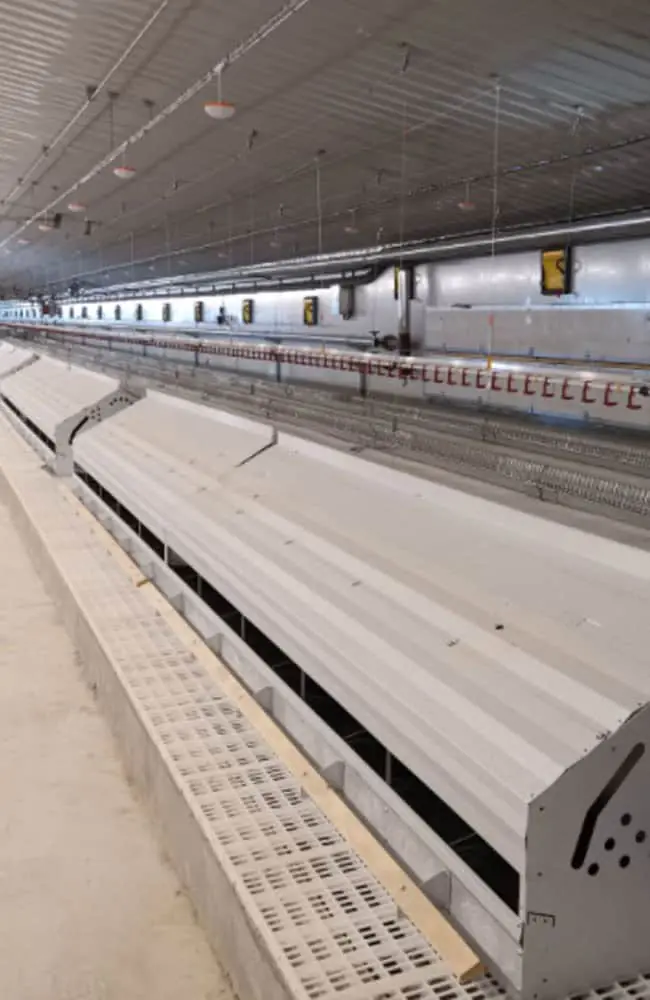
Step 2: Calibrating the Automated Mechanical Expulsion Timing Loop
Program the central controller to trigger the 24V mechanical push-out bars or tilt floors late in the afternoon. This gently evicts broody hens and prevents nightly manure fouling on the clean nest mats.
Step 3: Tuning Egg Belt Tensioners and VFD Collection Table Transition Angles
Adjust the alignment of the woven polypropylene conveyor belts to avoid tracking slip. Configure smooth-glide steel transition plates to transfer hatching eggs safely onto the terminal packing counter without blunt impacts.
Frequently Asked Questions
1. What is the ideal birds-to-nest ratio?
100–120 hens per dynamic group nest section is recommended for high acceptance and low floor eggs.
2. What egg belt speed is optimal?
2.5–4.0 m/min provides smooth collection without causing egg collisions or breakage.
3. When should the expulsion system activate?
Late afternoon to gently remove hens and prevent overnight nesting and manure fouling.
Conclusion
Proper configuration of automated poultry nest boxes and egg collection systems is fundamental to achieving floor egg rates below 0.5% and maximizing premium hatchery yield in commercial operations.
Need a Free Turnkey Poultry House Layout, Custom Automated Nest System Design & Wholesale Factory Quote?
Our engineering team provides complete automated nest box and egg collection system design for commercial poultry farms worldwide.
Related Articles
- Configuring Automated Breeder Floor Systems to Reduce Floor Eggs (2026)
- 2026 How to Configure Poultry Manure Fertilizer Pellet Machines for Best Commercial ROI
By Caroline, Senior Poultry Equipment Specialist at Weifang Splendid Machinery Equipment Co., Ltd. (18 years global experience in poultry nest and egg collection systems).
• Commercial Poultry Nest Box Engineering Standards 2025-2026
• Field performance data from automated nest and egg collection installations
• Poultry Hatchery Yield and Floor Egg Reduction Reports