Heavy-Duty Fiberglass vs Galvanized Steel Exhaust Fans for Poultry Houses
In high-humidity, high-ammonia poultry house environments, the choice between SMC fiberglass and hot-dip galvanized steel exhaust fans directly impacts long-term reliability, energy efficiency, and total cost of ownership. Understanding the material and performance differences is critical for commercial operators planning turnkey ventilation upgrades.
Quick Answer
SMC fiberglass exhaust fans offer superior corrosion resistance and a service lifespan of 10–15 years with virtually zero maintenance in aggressive poultry environments. Galvanized steel fans have a lower initial cost but typically last 5–8 years before significant zinc degradation and require more frequent belt and bearing maintenance.
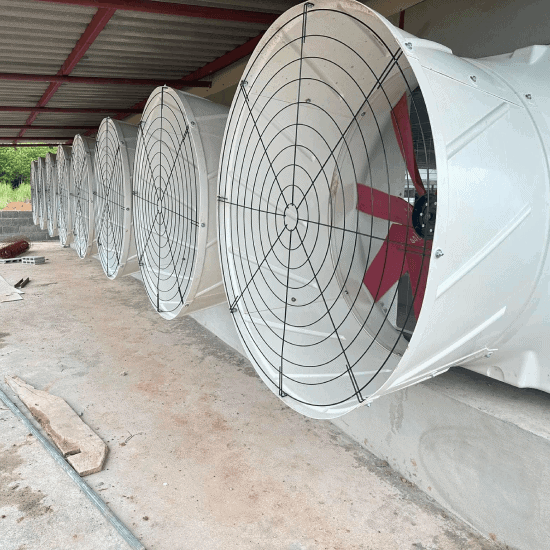
The Corrosive Crucible: Why Ammonia and Humidity Destroy Low-Grade Barn Ventilation
Poultry houses generate a highly corrosive atmosphere from ammonia, moisture, and frequent high-pressure washdowns. This environment rapidly degrades galvanized steel fans through zinc oxidation, leading to blade imbalance, motor failure, and increased energy consumption over time.
Materials Breakdown: SMC Molded Fiberglass vs. Hot-Dip Galvanized Steel Sheets
SMC (Sheet Molding Compound) fiberglass housings are molded in one piece, offering excellent structural integrity and smooth aerodynamic surfaces that reduce air resistance. Hot-dip galvanized steel provides good initial strength but is prone to pitting and rust once the zinc coating is compromised by ammonia exposure.
Fiberglass vs Galvanized Steel Fan Engineering Specifications (2026 Data)
| Performance Metric | SMC Fiberglass Fan | Hot-Dip Galvanized Steel Fan |
|---|---|---|
| Material & Construction | One-piece SMC molded housing | Assembled galvanized steel sheets |
| Average Service Lifespan (Years) | 10–15 | 5–8 |
| Ammonia Corrosion Resistance | Excellent (zero corrosion) | Moderate (zinc layer degrades) |
| Drive System Option | Direct-drive (preferred) | Belt-drive or direct-drive |
| CFM Efficiency Ratio at 25 Pa | High | Medium |
| Maintenance Overhead | Very Low | Medium to High |
Drive Systems & Energy Efficiency: Direct-Drive Motors vs. Traditional Belt-Driven Pulley Setups
Direct-drive fiberglass fans eliminate belt slippage losses (typically 8–12% energy waste) and require almost no maintenance. Belt-driven galvanized steel fans are cheaper initially but suffer from gradual efficiency drop and higher long-term electricity and replacement costs.
Total Cost of Ownership (TCO) Analysis: Balancing Upfront Capital vs. 10-Year Maintenance Costs
Although fiberglass fans have a higher initial purchase price, their superior durability, lower energy consumption, and minimal maintenance result in significantly lower 10-year total cost of ownership, especially for large-scale commercial operations running continuous tunnel ventilation.

Conclusion
For modern automated poultry houses, SMC fiberglass exhaust fans provide the best long-term value through superior corrosion resistance, energy efficiency, and reduced maintenance. While galvanized steel fans remain a viable lower-cost option for shorter project horizons, fiberglass is the preferred choice for sustainable, high-performance ventilation systems.
Need a Free Turnkey Poultry House Ventilation Layout, CFM Sizing Blueprint & Wholesale Factory Quote?
Our engineering team provides professional ventilation system design, fan selection analysis, and complete turnkey quotations tailored to your house size and climate requirements.
Frequently Asked Questions
1. Which fan type has better corrosion resistance in poultry houses?
SMC fiberglass fans have excellent corrosion resistance and virtually zero degradation in high-ammonia environments, while galvanized steel fans suffer from zinc layer degradation over time.
2. What is the typical service lifespan difference?
Fiberglass fans last 10–15 years with minimal maintenance, while galvanized steel fans typically last 5–8 years before requiring major repairs or replacement.
3. Which fan is more cost-effective in the long term?
Fiberglass fans have a higher upfront cost but significantly lower total cost of ownership due to longer lifespan, higher energy efficiency, and lower maintenance needs.
Related Articles
- How to Optimize Poultry House Cooling Pad Efficiency for Summer Temperature Control (2026)
- Heavy-Duty Fiberglass vs Galvanized Steel Exhaust Fans for Poultry Houses (2026)
By Caroline, Senior Poultry Equipment Specialist at Weifang Splendid Machinery Equipment Co., Ltd. (18 years global experience in poultry house ventilation systems).
• Commercial Poultry House Ventilation Equipment Standards 2025-2026
• Exhaust Fan Corrosion and Performance Testing Data
• Field reports from fiberglass and galvanized fan installations in commercial poultry houses