How Many Hens Per Nest Box in Commercial Layer Farms
Commercial layer farms typically use 4–6 hens per nest box in manual systems and 5–7 hens per nest box in automatic systems. This nesting density strikes the best balance between hen comfort, laying nest allocation, and floor egg control.
Most commercial egg farms operate with this ratio to achieve high nest acceptance while keeping production costs under control. Choosing the correct nest box ratio directly affects floor egg percentage, egg cleanliness, hen stress levels, and your daily labor cost.
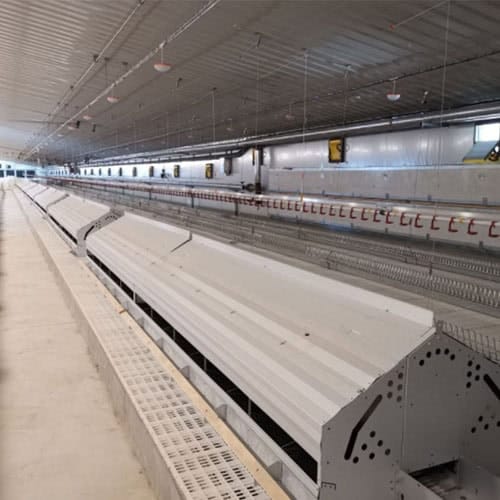
Why the Correct Nest Box Ratio for Layers Matters
Getting the layer nest box spacing and hens-per-nest ratio right directly affects floor egg percentage, egg cleanliness, hen stress levels, and your daily labor cost. Too many hens per nest box causes competition and dirty eggs. Too few wastes expensive house space and raises cost per bird.
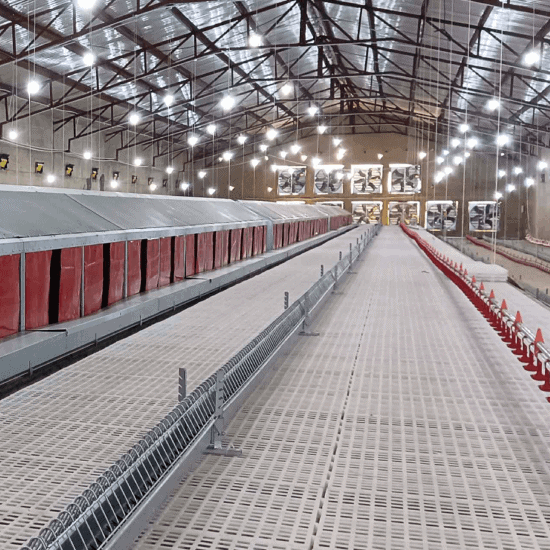
Recommended Standards by Farm Type
| Farm Size | Recommended Hens per Nest Box | Typical Nest Box Spacing |
|---|---|---|
| Small farms (<5,000 hens) | 4–5 hens | 1 nest per 4–5 hens |
| Medium farms (5k–30k hens) | 5–6 hens | 1 nest per 5 hens |
| Large commercial farms (30k+ hens) | 5–7 hens (automatic) | 1 nest per 5–6 hens |
Recommended Technical Parameters
| Item | Recommendation |
|---|---|
| Nest depth | 40–45 cm |
| Nest slope | 7–9° |
| Lighting inside nest | 5–10 lux |
Problems Caused by Incorrect Nest Box Ratio
- Too many hens per nest box → increased competition, higher floor eggs (8–15%), stressed birds, more dirty and broken eggs
- Too few hens per nest box → wasted space, higher cost per bird, lower overall house efficiency
- Wrong layer nest box spacing → uneven egg distribution and higher labor for collection
Factors Affecting the Correct Nest Box Ratio
- Breed size and laying behavior
- Automatic vs manual system (automatic allows slightly higher ratio)
- Light intensity and nest box design (depth 40–45 cm, slope 7–9°)
- House ventilation and temperature control
- Management practices and stocking density
Real Farm Case Study
An 80,000-layer farm in Kenya ran 7 hens per nest box in their automatic system. Floor eggs stayed below 2%, egg cleanliness was excellent, and labor for collection dropped 68%. When they tested 8 hens per nest box, floor eggs jumped to 7% and production uniformity suffered. They settled on 6 hens per nest box for the best balance.
Best Commercial Practices
- Use 5–6 hens per nest box as your starting target for automatic systems
- Ensure nest depth of 40–45 cm and gentle 7–9° slope for good roll-out
- Install proper lighting inside or near the nest box to attract hens
- Monitor floor egg percentage weekly and adjust ratio if needed
- Combine with good ventilation to keep nests cool and dry
FAQ – Buying and Management Questions
Q: How many hens per nest box is ideal for commercial farms?
A: 4–6 hens for manual systems and 5–7 hens for automatic nest box systems.
Q: What is the recommended nest box ratio for layers?
A: Most large farms run 1 nest per 5–6 hens for the best balance of acceptance and cost.
Q: Does layer nest box spacing affect egg production?
A: Yes — incorrect spacing leads to more floor eggs and lower overall production.
Need Help Calculating the Right Nest Box Ratio for Your Farm?
Our engineers can design the optimal nest box layout based on your exact flock size, cage type, and house dimensions.
Get a Free Nest Box Layout & Ratio Recommendation →
Related Guides for New Layer Farms
- Complete Nest Box Guide for Modern Layer Farms (2026)
- Automatic Nest Box vs Manual Nest Box: Which Is Better for Commercial Layer Farms?
- How to Install an Automatic Nest Box System in a Layer House (2026 Step-by-Step Guide)
- Automatic Nest Box Price Guide for Commercial Layer Farms (2026)
By Layer Housing Specialist Team, Weifang Splendid Machinery Equipment Co., Ltd.
• USDA Livestock & Poultry Outlook, Feb 2026
• Commercial Layer Housing Reports 2025-2026
• Field data from automatic nest box installations worldwide
Also read: Nest Box Systems | Global Project Cases