The Underlying Principle of H-Type Battery Cages: Why They Are More Effective Than Traditional Solutions in 2026
H-Type battery cages are widely chosen by large-scale layer farms because they solve the core challenges of space limitation, labor costs, and production consistency. Their stacked “H” design and high automation compatibility deliver better long-term results than traditional A-Type or floor systems. This article explains the fundamental principle behind their superior performance in 2026.
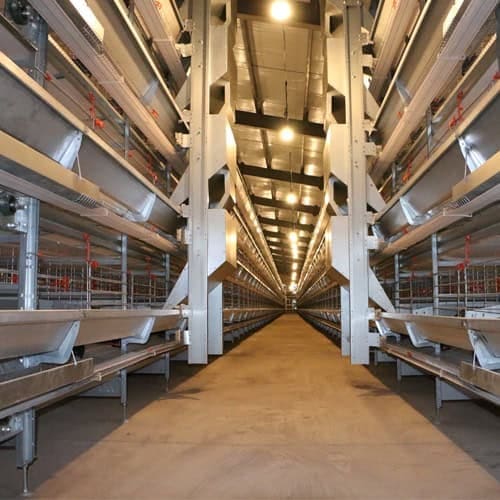
The Core Principle Behind H-Type Battery Cages
The fundamental principle is vertical space optimization combined with full automation. By stacking cages in an H-shaped structure, the system maximizes birds per square meter while enabling seamless integration of automatic feeding, egg collection, and manure removal. This design reduces manual labor and improves uniformity far more effectively than traditional flat or A-Type systems.
Why H-Type Cages Outperform Traditional Solutions
Traditional cage systems or floor rearing often suffer from low density, high labor requirements, and inconsistent results. H-Type cages solve these issues effectively.
| Aspect | Traditional Systems | H-Type Battery Cages |
|---|---|---|
| Stocking Density | Lower | 20-30% higher |
| Daily Labor | High | 35-50% lower |
| Egg Uniformity | Moderate | Significantly higher |
| Ventilation & Cleanliness | Limited | Better manure removal |
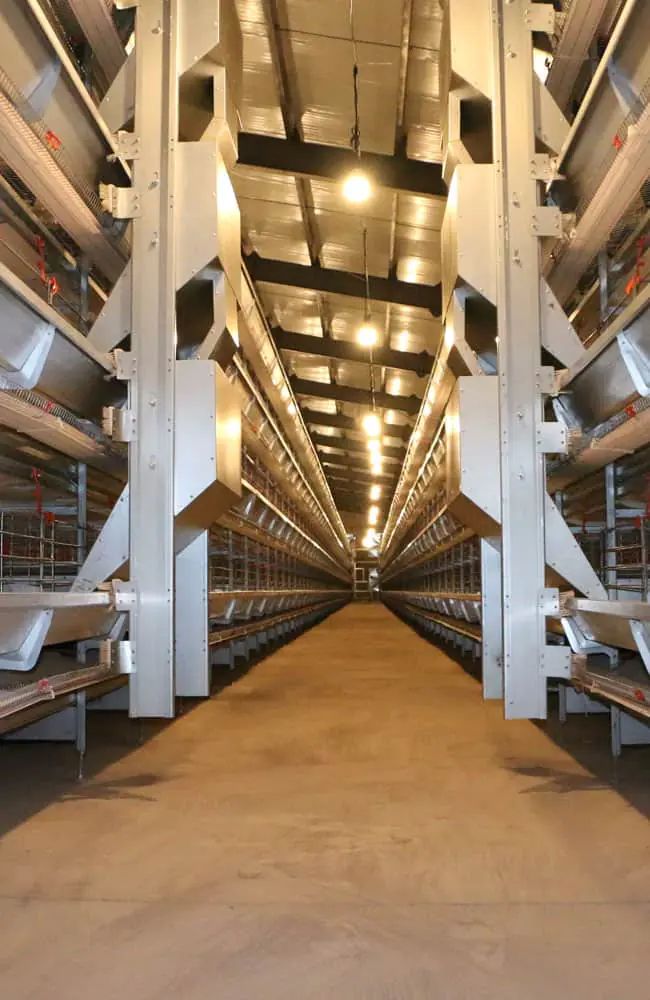
Real Performance Advantages in 2026
In large-scale operations, H-Type cages consistently show better feed conversion, higher egg output per square meter, and faster ROI. Farms using H-Type systems in 2026 report stronger long-term profitability compared to traditional methods, especially when scaling beyond 80,000 layers.
When H-Type Cages Provide the Greatest Advantage
H-Type cages are most effective for large commercial farms that need maximum density, full automation, and long-term efficiency. They help these operations stay competitive by reducing costs and increasing output in a sustainable way.
FAQ – Common Questions from Dealers and Layer Farms
- Why do large farms prefer H-Type over traditional cages?
Because of higher density, better automation, and stronger long-term ROI. - Is the initial cost justified?
For farms over 80,000 layers, the higher upfront cost is usually recovered within 2–3 years through labor savings and increased production. - Do H-Type cages require more maintenance?
Slightly more technical maintenance than simpler systems, but overall labor is significantly lower. - Are they suitable for hot climates?
Yes, when paired with proper ventilation and cooling systems. - What is the biggest advantage in 2026?
The ability to combine high density with full automation while maintaining good bird welfare.
This article was written by the Weifang Splendid Machinery Equipment team. For more insights on poultry farming equipment, please read 2026 Hen-Friendly Nest Box Design with High Acceptance Rate. External reference: Poultry World 2026 Industry Report.